 +91 96001 07057
 Sidharam Heart Clinic Adyar, Gandhi Nagar, Canal Bank Road, Opp.St.Louis School, Adyar, Chennai, Tamil Nadu 600020

 30 December, 2025
TMVR (Transcatheter Mitral Valve Replacement): A Comprehensive Guide to the Future of Mitral Valve Care
Mitral valve disease is a significant cause of heart failure and reduced quality of life, particularly in elderly patients and those with multiple medical conditions. Among the different forms of mitral valve disease, severe mitral regurgitation (MR) is the most common and challenging to treat. While open-heart surgery has long been the standard treatment, many patients are not suitable candidates due to high surgical risk.
Transcatheter Mitral Valve Replacement (TMVR) has emerged as a revolutionary, minimally invasive alternative, offering hope to patients who previously had limited or no treatment options. TMVR is redefining the management of complex mitral valve disease by combining advanced imaging, catheter-based technology, and multidisciplinary expertise.
This blog provides a detailed overview of TMVR, including the condition it treats, patient selection, procedural steps, benefits, risks, recovery, and future potential.
Understanding the Mitral Valve
The mitral valve is located between the left atrium and the left ventricle of the heart. It plays a crucial role in maintaining efficient blood circulation by allowing oxygen-rich blood to flow forward into the left ventricle while preventing backward leakage during heart contraction.
A healthy mitral valve opens and closes smoothly with every heartbeat. When the valve becomes diseased, stiff, or damaged, it disrupts normal blood flow and places excessive strain on the heart, eventually leading to symptoms of heart failure.
What Is Mitral Regurgitation?
Mitral regurgitation occurs when the mitral valve does not close completely, allowing blood to leak backward into the left atrium during ventricular contraction. Over time, this backward flow increases pressure in the lungs and reduces the heart’s ability to pump blood efficiently.
Common Causes of Mitral Regurgitation
-
Degenerative changes related to aging
-
Mitral valve prolapse
-
Rheumatic heart disease
-
Damage following a heart attack
-
Dilated cardiomyopathy
-
Failed prior mitral valve repair or surgery
Symptoms of Severe Mitral Regurgitation
-
Shortness of breath during exertion or at rest
-
Fatigue and reduced stamina
-
Swelling of legs and ankles
-
Palpitations
-
Recurrent hospital admissions for heart failure
If left untreated, severe mitral regurgitation can lead to progressive heart failure, pulmonary hypertension, and reduced life expectancy.
Limitations of Conventional Mitral Valve Surgery
Surgical mitral valve replacement or repair requires open-heart surgery, which involves opening the chest, placing the patient on a heart–lung machine, and a prolonged recovery period. Although surgery provides excellent outcomes in suitable patients, many individuals are considered high or prohibitive risk due to:
-
Advanced age
-
Severe heart failure
-
Chronic lung or kidney disease
-
Frailty
-
Previous cardiac surgeries
For these patients, traditional surgery may carry unacceptable risks, making less invasive options essential.
What Is Transcatheter Mitral Valve Replacement (TMVR)?
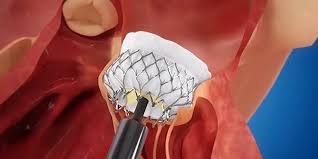
Transcatheter Mitral Valve Replacement is a minimally invasive, catheter-based procedure that replaces the diseased mitral valve without the need for open-heart surgery. A bioprosthetic valve is delivered to the heart through a catheter and implanted within the existing mitral valve structure.
Unlike mitral valve repair techniques, TMVR involves complete valve replacement, making it particularly useful in patients with complex valve anatomy or failed previous interventions.
TMVR is designed primarily for patients who are not candidates for conventional surgery and have limited treatment alternatives.
Who Is Considered for TMVR?
TMVR is not suitable for every patient with mitral valve disease. Careful patient selection is critical to ensure safety and optimal outcomes.
TMVR May Be Considered in Patients With:
-
Severe symptomatic mitral regurgitation
-
High or prohibitive surgical risk
-
Failed prior mitral valve repair or replacement
-
Degenerated surgical bioprosthetic mitral valves (valve-in-valve TMVR)
-
Severe mitral annular calcification
-
Persistent symptoms despite optimal medical therapy
Each patient is evaluated individually by a specialized Heart Team to determine the most appropriate treatment strategy.
Pre-Procedure Evaluation and Planning
TMVR requires meticulous planning using advanced imaging and clinical assessment.
Imaging Studies
-
Echocardiography (2D and 3D): Evaluates valve anatomy, severity of regurgitation, and heart function
-
Cardiac CT Scan: Essential for valve sizing, assessing calcium burden, and predicting the risk of left ventricular outflow tract obstruction
-
Angiography: Evaluates blood vessels for catheter access
Clinical Assessment
-
Heart failure severity
-
Lung and kidney function
-
Overall functional status and frailty
Heart Team Approach
A multidisciplinary team comprising interventional cardiologists, cardiac surgeons, imaging specialists, anesthetists, and heart failure experts collaboratively determines the suitability and procedural approach for TMVR.
How Is the TMVR Procedure Performed?
TMVR is performed in a specialized cardiac catheterization laboratory or hybrid operating room under advanced imaging guidance.
Access Routes
-
Transseptal approach: Through the femoral vein in the groin, crossing from the right atrium to the left atrium
-
Transapical approach: Through a small incision in the chest, accessing the heart directly
Valve Delivery and Deployment
A catheter carrying the compressed bioprosthetic valve is advanced to the mitral position. Once accurately positioned, the valve is expanded, anchoring securely within the native mitral valve and immediately restoring proper blood flow.
Completion
Valve function is confirmed using echocardiography, catheters are removed, and the procedure is completed without opening the chest.
Procedure duration: Approximately 2–4 hours
Typical hospital stay: 3–7 days
Recovery After TMVR
Recovery after TMVR is significantly faster and less demanding compared to open-heart surgery.
Patients typically experience:
-
Minimal post-procedure pain
-
Early mobilization within 24–48 hours
-
Rapid improvement in breathlessness and fatigue
-
Shorter intensive care and hospital stay
Most patients can return to routine daily activities within a few weeks, depending on overall health and recovery progress.
Benefits of TMVR
TMVR offers several important advantages for high-risk patients:
-
Avoids open-heart surgery
-
Reduced procedural trauma
-
Faster recovery and rehabilitation
-
Shorter hospital stay
-
Improved quality of life
-
Reduced frequency of heart failure hospitalizations
For many patients, TMVR provides meaningful symptom relief and restores functional independence.
Potential Risks and Limitations
Although TMVR is an advanced and evolving therapy, it is associated with certain risks, including:
-
Obstruction of blood flow from the heart (LVOT obstruction)
-
Valve malposition or leakage
-
Bleeding or vascular complications
-
Stroke (rare)
-
Need for additional interventions
These risks are minimized through careful patient selection, advanced imaging, and experienced heart teams.