 +91 96001 07057
 Sidharam Heart Clinic Adyar, Gandhi Nagar, Canal Bank Road, Opp.St.Louis School, Adyar, Chennai, Tamil Nadu 600020

 12 March, 2026
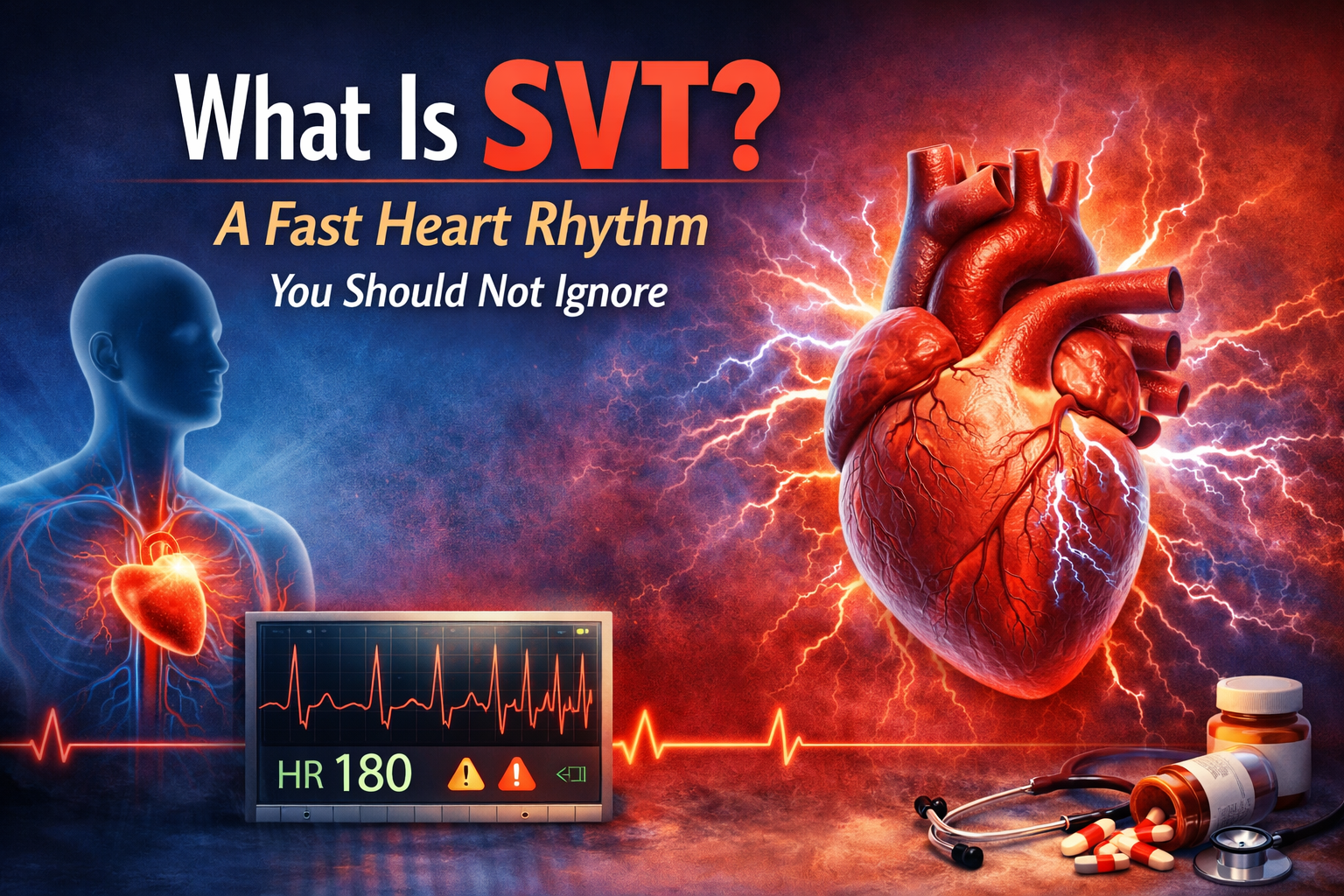
What Is SVT? A Fast Heart Rhythm You Should Not Ignore | Dr.Dhamodaran K
Most people know when something feels “off” with their heart.
It may begin as a sudden flutter in the chest. A pounding heartbeat that appears out of nowhere. A strange racing sensation that makes you stop what you are doing. Sometimes it lasts for a few seconds. Sometimes it goes on for minutes. Sometimes it leaves you feeling shaky, dizzy, breathless, or deeply unsettled.
Many people ignore these episodes.
They blame stress. Lack of sleep. Too much coffee. Anxiety. Overwork. Weakness. Dehydration.
And sometimes, yes, those things can affect the heart rate.
But sometimes, that fast heartbeat is not random.
It could be SVT, or Supraventricular Tachycardia — a heart rhythm condition that often goes unnoticed, misunderstood, or brushed aside until episodes start happening more often.
The good news is that SVT can usually be identified, managed, and treated effectively. The first step is awareness.
Understanding SVT in simple words
SVT is a type of abnormal fast heart rhythm. It starts in the upper part of the heart, above the lower pumping chambers. That is why it is called supraventricular.
Normally, the heart beats in a smooth, organized rhythm. An electrical signal starts in the right place, travels through the heart in the right order, and helps the heart pump blood efficiently.
In SVT, that electrical rhythm becomes abnormal. The heart suddenly starts beating too fast because the electrical signals are moving in a way they should not. This can cause the heart to race without warning.
What makes SVT different from an ordinary fast heartbeat is that it often starts suddenly and may stop just as suddenly.
One moment, everything feels normal.
The next moment, the heart is racing.
And then, just as unexpectedly, it settles down again.
That stop-start pattern is one of the reasons SVT can be confusing for patients.
Why SVT is often ignored
One of the biggest problems with SVT is that it can hide in plain sight.
A person may have repeated episodes but look completely normal in between. By the time they reach a clinic or hospital, the fast heartbeat may already have stopped. Their pulse may be normal. Their ECG may look fine at that moment. Their blood pressure may be stable.
So they go home thinking it was “nothing serious.”
But the episodes continue.
This is why many people with SVT spend months, and sometimes years, without a proper diagnosis.
Some are told it is stress.
Some are told it is anxiety.
Some are told to rest more.
Some simply learn to live with it.
But a repeatedly racing heart should never be ignored just because it comes and goes.
What does SVT feel like?
SVT does not feel exactly the same for everyone, but many people describe it in very similar ways.
Some say it feels like:
-
A sudden racing heartbeat
-
A pounding or thumping in the chest
-
Fluttering in the chest
-
A rapid pulse that comes out of nowhere
-
A feeling that the heart is “beating too hard”
-
A strange sensation in the throat or neck
-
Dizziness or lightheadedness
-
Breathlessness
-
Weakness or tiredness
-
Chest discomfort
-
A feeling of panic without an obvious reason
For some people, the episode is short and mild.
For others, it can feel frightening and exhausting.
Some patients say they feel as though their heart is “running away.” Others say they feel like they need to sit down immediately. In some cases, the episode can be so uncomfortable that it interferes with work, driving, sleep, exercise, or daily routine.
The sudden nature of SVT
One of the most important clues in SVT is how suddenly it starts.
A person may be walking, talking, eating, bending down, climbing stairs, lying in bed, or even sitting quietly when the heartbeat suddenly becomes very fast.
There may be no warning.
There may be no pain at first.
Just a strong awareness that something has changed.
This sudden beginning matters because it helps doctors separate SVT from other causes of a fast heartbeat.
A normal rise in heart rate during exercise happens gradually.
A fast heartbeat from fear or stress often builds with the situation.
But SVT often begins abruptly and may end just as abruptly.
That pattern is important.
Is SVT dangerous?
This is one of the first questions patients ask.
The answer depends on the person, the type of SVT, how often it happens, how long episodes last, and whether there are any other heart problems present.
In many people, SVT is not immediately life-threatening, but that does not mean it should be ignored.
Frequent or prolonged episodes can affect quality of life. They can cause repeated emergency visits, fear of exertion, poor sleep, and constant worry. Some people begin avoiding travel, exercise, or social situations because they are afraid an episode will happen.
In certain situations, a very fast rhythm can cause significant symptoms such as severe dizziness, fainting, chest pain, or breathlessness. These symptoms should never be taken lightly.
The key point is simple: even when SVT is treatable and manageable, it still deserves proper medical evaluation.
Why SVT is mistaken for anxiety
SVT and anxiety can feel surprisingly similar.
Both may cause:
-
Racing heart
-
Sweating
-
Chest tightness
-
Breathlessness
-
Dizziness
-
A sense of fear or alarm
That is why many people with SVT are initially mislabelled as anxious.
But there is an important difference.
In anxiety, the emotional trigger often comes first and the racing heart follows.
In SVT, the abnormal rhythm may happen first, and the fear comes because the heart is suddenly beating so fast.
In other words, the patient is not “overreacting.” The heart rhythm itself may be the problem.
This is why repeated episodes of sudden fast heartbeat should not be dismissed without proper evaluation.
What can trigger an SVT episode?
Not every person has a clear trigger, but some people notice episodes happening more often with certain factors.
These may include:
-
Stress
-
Lack of sleep
-
Excess caffeine
-
Smoking
-
Alcohol
-
Dehydration
-
Overexertion
-
Certain medications
-
Fever or illness
However, SVT can also happen when a person is resting quietly and feels otherwise normal. So even if there is no clear trigger, repeated episodes still matter.
How doctors diagnose SVT
The diagnosis of SVT often begins with the patient’s story.
What did the episode feel like?
How fast did it start?
How long did it last?
Did it stop suddenly?
Did you feel dizzy, weak, or breathless?
Were you exercising, resting, or under stress?
Because SVT may not always be happening during the clinic visit, the description of symptoms becomes very important.
Doctors may use tests such as:
ECG
An ECG records the electrical activity of the heart. If it is done during an episode, it can be very helpful in showing the abnormal rhythm.
Holter monitor
This is a portable monitor worn for a period of time to record heart rhythm during day-to-day life.
Event monitor or longer rhythm monitoring
If episodes happen less often, longer monitoring may be needed to catch them.
Blood tests and other evaluation
Sometimes doctors also check for related issues such as thyroid problems, electrolyte imbalance, anemia, or other factors that may influence heart rhythm.
The challenge with SVT is that if the rhythm is not captured during symptoms, diagnosis can take longer. That is why patients are often encouraged to describe episodes clearly and report how often they happen.
Why early diagnosis matters
Many people tolerate symptoms for too long because they assume the episodes are harmless.
But early diagnosis can make a major difference.
It can:
-
Reduce uncertainty
-
Prevent repeated panic and fear
-
Help avoid unnecessary treatments for the wrong problem
-
Improve quality of life
-
Identify the exact rhythm issue
-
Guide proper treatment options
-
Reduce repeated emergency visits
When the problem is finally identified, many patients feel relieved. They are no longer left guessing. They understand what is happening, and they can move toward the right treatment.
Treatment for SVT
SVT treatment depends on the type of rhythm problem, how severe symptoms are, how often episodes happen, and the patient’s overall health.
Some episodes may stop on their own.
Some patients are taught simple techniques that may help slow the rhythm during an episode. These are done only under medical guidance.
For patients with recurrent symptoms, treatment may include medications to help control the rhythm or reduce the frequency of episodes.
In some cases, one of the most effective treatments is catheter ablation. This is a procedure used to identify and treat the abnormal electrical pathway that is causing the rhythm problem. For many patients, it can offer long-term relief and, in suitable cases, may effectively cure the issue.
The right treatment depends on the individual patient. That is why a proper rhythm diagnosis is so important before deciding what to do next.
When should you seek medical attention immediately?
A racing heartbeat should never be ignored if it is associated with more serious symptoms.
Seek urgent medical care if the fast heartbeat happens with:
-
Chest pain
-
Severe breathlessness
-
Fainting
-
Near-fainting
-
Extreme weakness
-
Severe dizziness
-
Confusion
-
Persistent symptoms that do not settle
Even if the episode stops on its own, repeated attacks should still be evaluated by a doctor.
Living with SVT
Living with unexplained heart rhythm episodes can be emotionally draining.
Some people become hyper-aware of every heartbeat.
Some are afraid to exercise.
Some stop drinking coffee, change their schedule, or avoid travel without even knowing what condition they have.
The uncertainty can be more stressful than the condition itself.
That is why awareness matters.
When patients understand that a sudden racing heartbeat may have a real electrical cause, they are more likely to seek help early instead of silently suffering through repeated episodes.
The message is not to create fear.
The message is to create clarity.
SVT is not something to panic about, but it is something to take seriously.
The bigger message patients should remember
Not every fast heartbeat is dangerous.
Not every flutter means there is a major heart problem.
But not every racing heart is “just stress” either.
If your heartbeat repeatedly becomes fast without warning, especially if it starts suddenly and stops suddenly, it deserves attention.
If it leaves you dizzy, breathless, uncomfortable, or frightened, it deserves evaluation.
If it keeps coming back, it deserves a proper diagnosis.
The heart has its own electrical language. Sometimes, these sudden rhythm episodes are its way of asking for help.
Listening early can make all the difference.
Conclusion
SVT is a fast heart rhythm disorder that often hides behind common explanations like stress, anxiety, or fatigue. Because it can start suddenly and disappear quickly, many people live with symptoms for a long time before getting the right diagnosis.
That is why awareness is so important.
A sudden racing heartbeat should not automatically be dismissed. If it happens repeatedly, interrupts daily life, or comes with symptoms like dizziness, breathlessness, chest discomfort, or weakness, medical evaluation is important.
The encouraging part is that SVT is often manageable and treatable. With the right diagnosis and the right care, many patients can find relief, reassurance, and a much better quality of life.
FAQs About SVT
1. What is SVT in simple terms?
SVT stands for Supraventricular Tachycardia. It is a condition where the heart suddenly beats faster than normal because of an abnormal electrical rhythm in the upper part of the heart.
2. Is SVT the same as a heart attack?
No. SVT is a heart rhythm problem, while a heart attack happens when blood flow to part of the heart muscle is blocked. They are different conditions, though both can cause chest-related symptoms.
3. What are the common symptoms of SVT?
Common symptoms include sudden racing heartbeat, palpitations, chest fluttering, dizziness, breathlessness, weakness, tiredness, chest discomfort, and in some cases fainting.
4. Can SVT come and go suddenly?
Yes. One of the classic features of SVT is that it can start suddenly and stop suddenly. Many patients notice this abrupt pattern.
5. Can SVT be mistaken for anxiety?
Yes. SVT is often confused with anxiety because both can cause a racing heart, sweating, and a sense of panic. That is why repeated sudden episodes should be properly evaluated.
6. What triggers SVT?
Possible triggers may include stress, lack of sleep, caffeine, smoking, alcohol, dehydration, illness, or exertion. However, some episodes happen without any clear trigger.
7. How is SVT diagnosed?
Doctors may diagnose SVT using a patient’s symptom history, ECG, Holter monitoring, event monitoring, and other tests to capture the heart rhythm during an episode.
8. Can an ECG miss SVT?
Yes. If the ECG is done when the patient is not having symptoms, it may look normal. That is why longer monitoring is sometimes needed.
9. Is SVT dangerous?
In many cases, SVT is treatable and not immediately life-threatening, but it should still not be ignored. Severe symptoms or frequent episodes need medical attention.
10. Can SVT cause dizziness?
Yes. A very fast heart rhythm can reduce efficient blood flow and may cause dizziness, lightheadedness, or weakness.
11. Can SVT happen in young people?
Yes. SVT can occur in younger adults as well as older adults. It is not limited to one age group.
12. Does SVT always need treatment?
Not always in the same way. Some patients may only need monitoring, while others may need medication or procedures depending on the type and frequency of episodes.
13. What is catheter ablation for SVT?
Catheter ablation is a procedure used to identify and treat the abnormal electrical pathway causing the fast rhythm. It can be a very effective treatment for many patients.
14. When should I see a doctor for a fast heartbeat?
You should see a doctor if you have repeated episodes of sudden fast heartbeat, especially if they come with dizziness, breathlessness, chest discomfort, weakness, or fainting.
15. Can SVT be cured?
In many suitable cases, catheter ablation can provide long-term relief and may effectively cure the abnormal rhythm problem.
Dr. Dhamodaran K
Interventional Cardiologist
Chennai
 Consultation Locations
 Sidharam Multispeciality Clinic
Old #2, New #4, Canal Bank Road, Gandhi Nagar,
Adyar, Chennai, Tamil Nadu 600020
Working Hours:
MON – THU | 06 PM – 09 PM
Apollo 24×7
Apollo Hospitals Greams Road
Chennai
Working Hours:
MON – SAT | 10 AM – 4 PM