 +91 96001 07057
 Sidharam Heart Clinic Adyar, Gandhi Nagar, Canal Bank Road, Opp.St.Louis School, Adyar, Chennai, Tamil Nadu 600020

 20 May, 2026
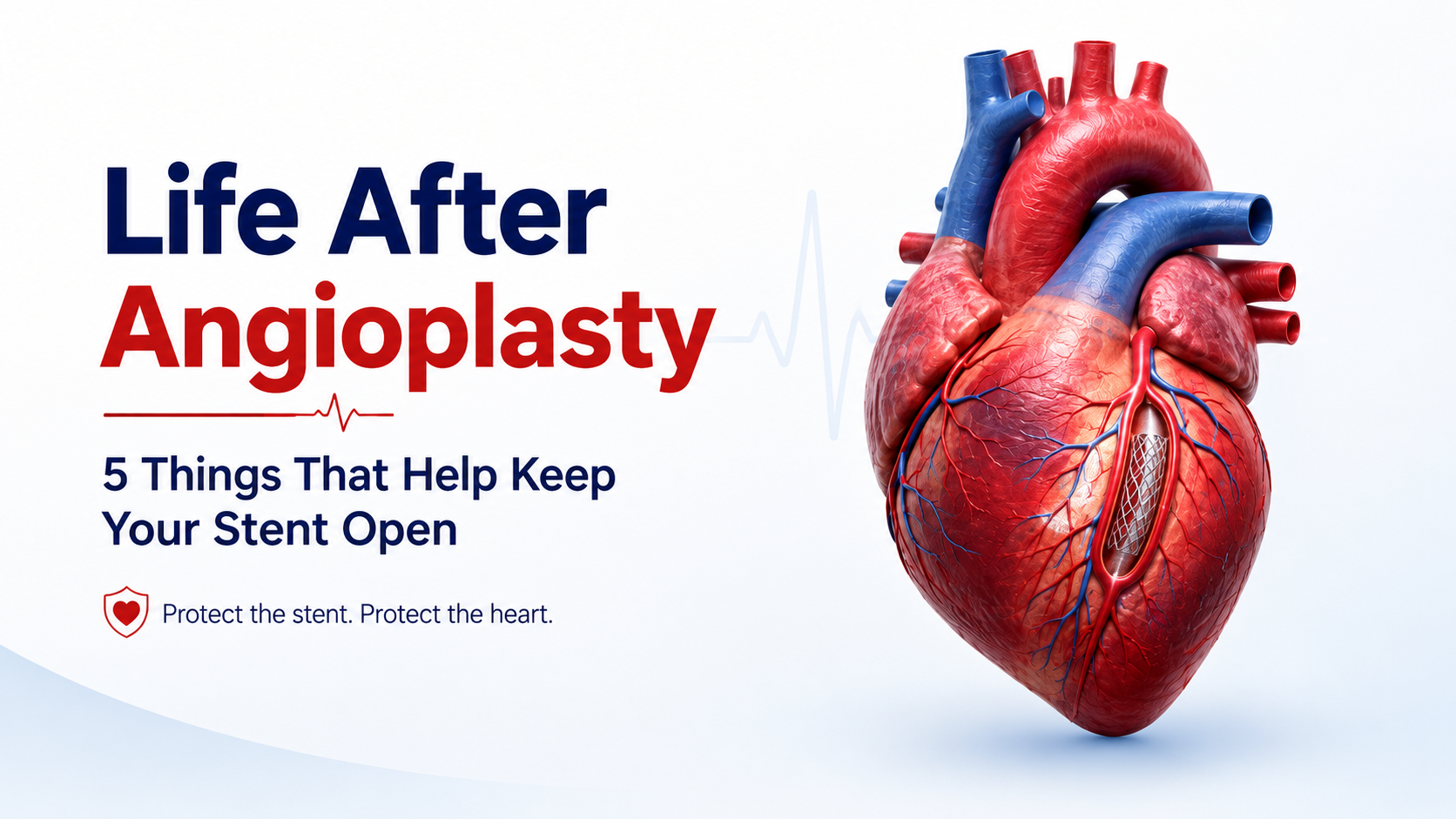
Life After Angioplasty: 5 Things That Decide Whether Your Stent Stays Open for Years
Angioplasty can feel like a huge relief.
For many patients, chest pain reduces. Breathing improves. Walking becomes easier. The fear of a blocked artery begins to settle. Family members feel hopeful because the heart has received blood flow again.
But there is one important truth every angioplasty patient must understand:
Angioplasty is not the end of heart disease. It is the beginning of lifelong heart protection.
During angioplasty, the cardiologist opens the blocked artery, usually by placing a stent. The stent works like a small support frame that keeps the artery open and allows blood to flow better.
But the stent does not remove the disease from the body.
The same factors that caused the blockage in the first place — high cholesterol, diabetes, high blood pressure, smoking, obesity, stress, poor diet, and lack of activity — can continue damaging the blood vessels.
That is why life after angioplasty matters as much as the procedure itself.
The cardiologist opens the road.
Your daily habits decide whether the traffic jam comes back.
Why Stent Care After Angioplasty Is So Important
A stent is placed to improve blood flow through a narrowed or blocked coronary artery. But after the procedure, two major risks must be prevented:
1. Clot formation inside the stent
This can be dangerous and may lead to a heart attack.
2. Re-narrowing of the artery over time
This can happen if the disease process continues.
That is why doctors prescribe medicines and lifestyle changes after angioplasty. These are not optional. They are part of the treatment.
The American Heart Association explains that dual antiplatelet therapy, often called DAPT, is used for people who have stents placed in their coronary arteries to help prevent blood clotting.
So, after angioplasty, the question is not only:
“Was the stent placed successfully?”
The bigger question is:
Are you protecting the stent every day?
1. Never Stop Blood Thinners Without Your Cardiologist’s Advice
This is the most important rule after angioplasty.
Many patients make a dangerous mistake. Once they feel better, they stop medicines on their own. Some stop because they feel normal. Some stop because of minor bleeding. Some stop before dental work or another surgery without informing their cardiologist.
This can be risky.
After angioplasty, patients are usually prescribed blood-thinning medicines such as aspirin and another antiplatelet medicine. These medicines help prevent clot formation inside the stent.
For patients who had angioplasty after an acute coronary syndrome such as a heart attack, guidelines commonly recommend dual antiplatelet therapy for around 12 months as the default strategy, depending on bleeding risk and the doctor’s decision.
Patient message:
Do not stop aspirin, clopidogrel, ticagrelor, prasugrel, or any blood thinner without asking your cardiologist.
Even stopping for a few days can be risky in some patients, especially soon after stent placement.
If you have bleeding, acidity, bruising, surgery planned, dental treatment, or any side effect, do not stop the medicine yourself. Speak to your doctor first.
2. Keep LDL Cholesterol Low — Your Stent Depends on It
Angioplasty opens one blockage. But cholesterol can continue building plaque in other arteries and even around treated areas.
This is why cholesterol control after angioplasty must be aggressive.
The most important cholesterol number after angioplasty is usually LDL cholesterol, often called “bad cholesterol.”
For patients with established heart disease, especially those considered very high risk, European guidance recommends lowering LDL-C to below 55 mg/dL and achieving at least a 50% reduction from baseline.
Statins are commonly prescribed after angioplasty. They are not given only to reduce cholesterol numbers. They also help stabilize plaque and reduce the risk of future cardiac events.
Many patients think:
“My cholesterol is normal now, so I can stop the statin.”
That is not correct.
After angioplasty, statins are usually long-term protective medicines. Your doctor may also add other cholesterol-lowering medicines if LDL remains high.
What patients should do:
Get lipid profile checked regularly
Take statins as prescribed
Avoid fried and processed foods
Reduce trans fats and excess sugar
Increase fiber through vegetables, fruits, pulses, and whole grains
Maintain a healthy weight
Do not stop cholesterol medicines without medical advice
Your stent is only one part of the solution. Cholesterol control protects the entire heart circulation.
3. Control Diabetes and Blood Pressure Strictly
Diabetes and high blood pressure are two silent enemies after angioplasty.
They may not cause symptoms every day, but they can continuously damage blood vessels.
High blood sugar makes arteries more prone to plaque buildup and inflammation. High blood pressure puts extra force on the artery walls and makes the heart work harder.
If diabetes and BP are uncontrolled after angioplasty, the risk of future blockage, heart attack, kidney problems, stroke, and heart failure can increase.
Important numbers to monitor:
Blood pressure
Fasting and post-meal sugar
HbA1c
Kidney function
Cholesterol
Weight and waist size
Your exact targets should be decided by your cardiologist or physician based on your age, kidney function, heart condition, and other medical history.
Practical habits:
Check BP at home if advised
Do not skip diabetes medicines
Reduce salt intake
Avoid sugary drinks and sweets
Walk regularly after doctor approval
Sleep well
Manage stress
Attend regular follow-ups
After angioplasty, sugar and BP control are not just “general health advice.”
They are stent-protection habits.
4. Quit Smoking Completely — Even “Just One Cigarette” Matters
Smoking is one of the strongest risk factors for heart disease.
After angioplasty, continuing to smoke can damage the artery lining, increase clotting risk, reduce oxygen supply, and speed up plaque formation.
Some patients proudly say:
“I have reduced from 10 cigarettes to 2.”
That is a good start, but after angioplasty, the goal should be complete quitting.
Even occasional smoking can harm blood vessels.
The same applies to tobacco chewing, vaping, and other nicotine products.
How to quit after angioplasty:
Set a fixed quit date
Remove cigarettes and tobacco from home
Avoid smoking friends or triggers in the early phase
Ask your doctor about nicotine replacement if suitable
Take family support
Restart immediately if you relapse
Do not treat one mistake as failure
Your stent gave your artery a second chance. Smoking can take that chance away.
5. Do Cardiac Rehab and Regular Follow-Up
Many patients think recovery after angioplasty means resting at home for a few days and then returning to normal life.
But the best recovery is not just rest. It is guided recovery.
Cardiac rehabilitation helps patients safely return to activity, improve stamina, understand medicines, control risk factors, reduce fear, and build long-term heart habits.
Research shows that participation in outpatient cardiac rehabilitation after PCI is associated with better quality of life and reduced readmission rates.
Cardiac rehab can help answer questions like:
How much walking is safe?
When can I climb stairs?
When can I return to work?
What exercise should I avoid?
What heart rate is safe?
What symptoms should I watch for?
Regular follow-up is equally important.
Do not meet your cardiologist only when chest pain returns. Heart disease can progress silently.
Follow-up helps monitor:
Medicine response
BP and sugar control
Cholesterol levels
ECG changes
Symptoms
Exercise capacity
Side effects
Risk of future blockage
Angioplasty is a procedure.
Follow-up is the long-term protection plan.
Common Mistakes Patients Make After Angioplasty
Mistake 1: Stopping medicines after feeling better
Feeling better means the stent is helping. It does not mean the disease is gone.
Mistake 2: Taking blood thinners irregularly
Missing antiplatelet medicines can be risky, especially soon after stenting.
Mistake 3: Ignoring cholesterol
LDL control is one of the most important parts of preventing future heart problems.
Mistake 4: Not controlling diabetes
Diabetes can silently damage the arteries even when the patient feels normal.
Mistake 5: Restarting smoking
Smoking after angioplasty can increase the risk of repeat heart problems.
Mistake 6: Skipping follow-up
No symptoms does not always mean no risk.
Mistake 7: No exercise plan
Too much rest can slow recovery, while unsafe exercise can create fear. A guided plan is best.
Life After Angioplasty: A Simple Daily Checklist
Every Day
Take medicines on time
Avoid smoking and tobacco
Eat heart-friendly food
Walk as advised
Drink enough water unless restricted
Avoid excess salt and sugar
Watch for unusual symptoms
Every Week
Track BP readings
Check weight
Review walking capacity
Avoid missed doses
Plan meals better
Stay active
Every 3–6 Months
Visit your cardiologist as advised
Check lipid profile
Check sugar and HbA1c if diabetic
Review kidney function if recommended
Discuss medicine side effects
Update exercise plan
Every Year
Have a complete cardiac review
Reassess risk factors
Review long-term medicine plan
Check if any further testing is needed
What Symptoms Should Not Be Ignored After Angioplasty?
Contact your doctor if you notice:
Chest pain or pressure
Pain spreading to left arm, jaw, back, or shoulder
Breathlessness
Unusual sweating
Sudden fatigue
Palpitations
Dizziness or fainting
Swelling in legs
Reduced walking capacity
New discomfort during exertion
Do not wait for severe pain. Early reporting can prevent major complications.
The Right Mindset After Angioplasty
The best way to understand angioplasty is this:
Your stent keeps the artery open. Your lifestyle keeps the disease under control.
Angioplasty can save heart muscle.
Medicines protect the stent.
Lifestyle protects the arteries.
Follow-up protects the future.
A successful angioplasty should not make you careless. It should make you more committed to heart health.
Expert Message for Patients
After angioplasty, many patients get a second chance at life. But that second chance needs discipline.
Do not stop medicines.
Do not ignore cholesterol.
Do not take diabetes and BP lightly.
Do not smoke.
Do not skip follow-up.
Because the goal is not only to place a stent successfully.
The goal is to keep your heart protected for years.
FAQs on Life After Angioplasty
1. Is angioplasty a permanent cure for heart blockage?
No. Angioplasty opens a blocked artery, but it does not cure the underlying disease process. Long-term medicines, lifestyle changes, and follow-up are needed.
2. Can a stent get blocked again?
Yes. A stent can develop clotting or re-narrowing in some patients. The risk is higher if medicines are stopped, diabetes is uncontrolled, cholesterol remains high, or smoking continues.
3. Can I stop blood thinners after angioplasty?
Do not stop blood thinners without your cardiologist’s advice. Stopping antiplatelet medicines too early can be dangerous, especially after stent placement.
4. How long should I take medicines after angioplasty?
The duration depends on your condition, type of stent, bleeding risk, and whether angioplasty was done for stable disease or heart attack. Some medicines may be needed for months, while others may be lifelong.
5. What food should I eat after angioplasty?
Eat more vegetables, fruits, whole grains, pulses, nuts in moderation, and lean protein. Reduce fried foods, processed foods, excess salt, sweets, sugary drinks, and trans fats.
6. Can I exercise after angioplasty?
Yes, but exercise should be restarted as advised by your doctor. Many patients benefit from a supervised cardiac rehabilitation program.
7. When should I visit my cardiologist after angioplasty?
Follow the schedule given by your cardiologist. You should also visit earlier if you develop chest pain, breathlessness, palpitations, dizziness, swelling, or reduced exercise capacity.