 +91 96001 07057
 Sidharam Heart Clinic Adyar, Gandhi Nagar, Canal Bank Road, Opp.St.Louis School, Adyar, Chennai, Tamil Nadu 600020


 15 October, 2026
Heart Blockage at 75 or 80: Is Complex Angioplasty Safe at This Age?
“He’s 81. Is it even worth putting him through this?” Families ask us this almost every week, usually in a lowered voice in the corridor. It comes from love — and fear. The good news is that age alone is no longer the deciding factor for angioplasty. What matters far more is how strong, independent and well the person is.
An 81-year-old retired school headmaster still walks to the temple every morning and argues about cricket with his grandson. Lately, he stops halfway because of tightness in his chest. His angiogram shows a heavily calcified blockage. One relative says, “At his age, just give tablets.” Another says, “He is so active — why should he suffer?”
Both relatives want the best for him. This article explains how cardiologists actually weigh this decision, and what the latest evidence says about angioplasty in people over 75 and 80.
Key takeaways
- Biological age matters more than birth certificate age. An active 82-year-old may be a better candidate than a frail 68-year-old.
- In a major heart attack (STEMI), emergency angioplasty is the standard treatment at any age.
- Recent trials in patients over 75–80 show angioplasty reduces future heart attacks and repeat emergencies, with low complication rates in experienced hands.
- Older arteries are often calcified and kidneys more sensitive, so complex angioplasty techniques and careful planning make a real difference.
- The goal is not just a longer life, but a better one: fewer symptoms, more independence and fewer hospital admissions.
Age is a number. Frailty is the real question.
Two 80-year-olds can be completely different patients. Cardiologists therefore look at frailty — the body’s overall reserve — rather than age alone. Simple questions tell us a lot:
- Can they walk independently, at a normal pace, without frequent stops?
- Do they manage daily activities — bathing, dressing, eating — on their own?
- Has there been unintentional weight loss or a recent fall?
- Is memory reasonably intact? Can they understand and take part in the decision?
- How are their kidneys, lungs and blood counts?
A person who is robust on these measures often does remarkably well after angioplasty. A frail person may still benefit, but the approach is more cautious and the goals are discussed more carefully.
What the research says about angioplasty after 75 and 80
For many years, older patients were under-represented in heart trials. That has changed, and the evidence is now much clearer.
| Study | Who was studied | What it found |
|---|---|---|
| After Eighty (Lancet, 2016) | 457 patients aged 80+ with a non-ST-elevation heart attack or unstable angina | An invasive strategy (angiogram ± angioplasty) significantly reduced the combination of heart attack, urgent revascularisation, stroke and death compared with medicines alone. |
| SENIOR-RITA (NEJM, 2024) | 1,518 patients aged 75+ (average age 82) with a non-ST-elevation heart attack | Invasive treatment did not change cardiovascular death, but reduced repeat heart attacks (11.7% vs 15.0%) and the need for later urgent procedures (3.9% vs 13.7%). Procedure complications were under 1%. |
| SENIOR (Lancet, 2018) | 1,200 patients aged 75+ undergoing angioplasty | Modern drug-eluting stents with a short course of dual blood thinners were better than older bare-metal stents. |
In plain words: for older people with a heart attack, angioplasty may not always add years to life, but it often adds better years — with fewer repeat heart attacks, fewer emergency admissions and less chest pain. For many families, that is exactly what matters.
Myth vs fact: angioplasty in later life
The answer depends on the situation
1. A major heart attack (STEMI)
When an artery is suddenly and completely blocked, emergency (primary) angioplasty is the most effective treatment at any age. Every minute counts. Age should never delay a family from calling 108 and going directly to a hospital with a 24-hour cath lab.
2. A smaller heart attack or unstable angina (NSTEMI)
Here, the trials above apply. For most reasonably fit older patients, an angiogram followed by angioplasty where needed is recommended. For very frail patients, an individual decision is made with the family.
3. Stable chest pain on exertion
Medicines are usually tried first. Angioplasty is considered when chest pain or breathlessness continues to limit daily life despite good medical treatment, or when tests show a large area of the heart at risk.
4. Told bypass surgery is too risky
Older patients are more likely to be declined for open-heart surgery. For them, complex high-risk angioplasty may be the only way to restore blood flow. Read more in Bypass Surgery Is Too Risky for Me — What Other Options Do I Have?
What is different about angioplasty in older patients?
Older arteries and organs bring specific challenges. Experienced complex-PCI teams plan for each of them:
🦴 Calcified arteries
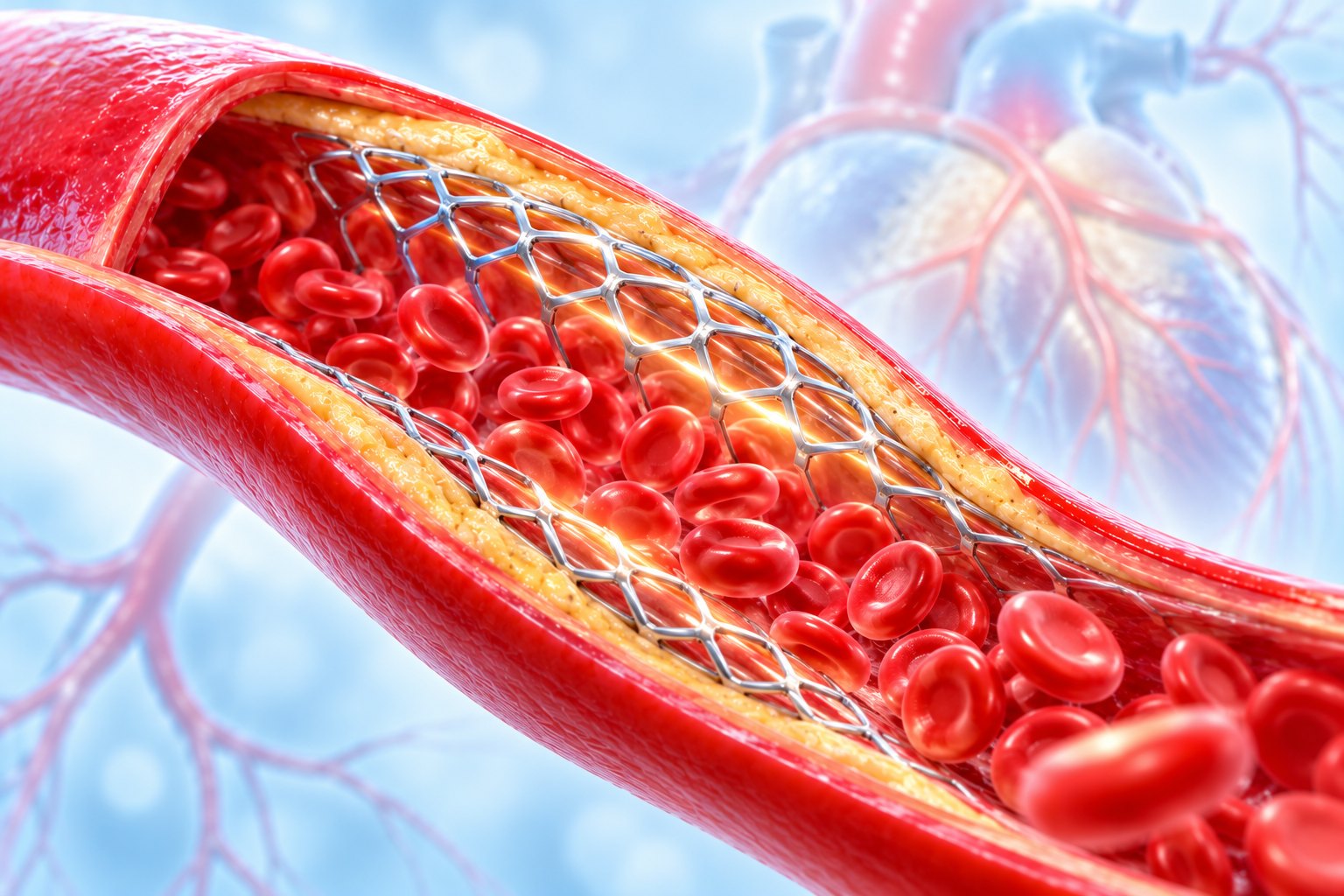
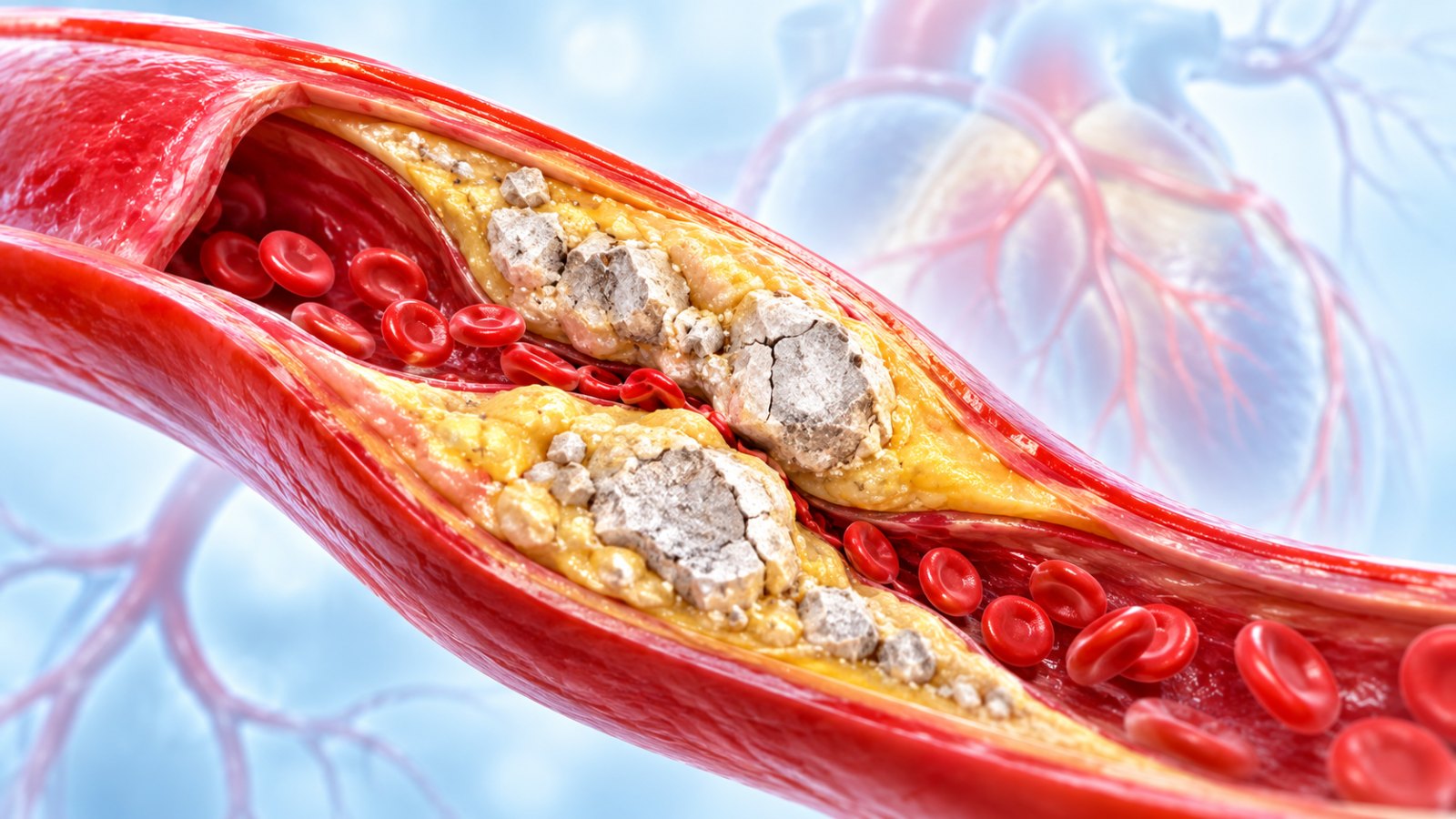
Calcium makes arteries hard like bone. Rotational atherectomy or Shockwave lithotripsy is used to crack it so the stent opens fully, guided by IVUS or OCT imaging.
💧 Sensitive kidneys
Ultra-low-contrast techniques, careful hydration and imaging guidance help protect kidney function. (Read about zero-contrast angioplasty.)
🩸 Bleeding risk
The wrist (radial) route is preferred over the groin, and blood-thinner duration is tailored — often shorter in older patients.
🧠 Confusion after hospital stay
Short stays, minimal sedation, early walking and family presence reduce the risk of post-procedure confusion (delirium).
When angioplasty may not be the right choice
Good care also means knowing when not to intervene. Angioplasty may not be advisable when:
- The person has no symptoms and tests show only a small area at risk.
- Advanced dementia, cancer or another illness severely limits life expectancy or quality of life.
- The person, after understanding the options, prefers not to have a procedure.
- Bleeding risk is so high that the required blood thinners cannot be taken safely.
In these situations, well-chosen medicines, symptom control and regular follow-up can still provide comfort and protection. Respecting the patient’s own wishes is always part of the decision.
For patients who have several health conditions at once, see also: Angioplasty in High-Risk Patients: Safer Heart Care for Complex Health Conditions.
Recovery at home: a guide for families
- Medicines: use a weekly pill organiser. Never stop blood thinners without speaking to the cardiologist, even before dental work.
- Wrist site: avoid lifting heavy objects with that hand for about 5–7 days. Mild bruising is normal.
- Walking: start with short indoor walks on day one, increasing gradually to 20–30 minutes daily over a few weeks.
- Bleeding signs: report black stools, blood in urine, or unusual bruising promptly.
- Fall prevention: some heart medicines lower blood pressure, so stand up slowly and keep night lights on.
- Follow-up: keep the first review appointment, usually within 1–4 weeks.
Older people often have “silent” or unusual heart attack symptoms. Watch for sudden breathlessness, unusual tiredness, confusion, sweating, nausea or discomfort in the upper abdomen — not just chest pain. If in doubt, call 108 immediately.
Frequently asked questions
Is angioplasty safe at the age of 80 or above?
In carefully assessed patients, yes. Modern trials in people over 75–80 report low complication rates, especially with the wrist approach, imaging guidance and kidney-protection strategies. The decision depends on overall fitness and frailty rather than age alone.
Is there an upper age limit for angioplasty?
No fixed limit. Angioplasty is performed successfully in patients in their late 80s and 90s when the expected benefit — fewer symptoms, fewer heart attacks, better independence — outweighs the risks.
How long does recovery take for an elderly patient?
Most go home in 1–3 days after a planned wrist-approach procedure and return to light daily activity within a week. Complex procedures or a recent heart attack may need a little longer.
Is bypass surgery better than angioplasty for elderly patients?
For older or frail patients, bypass surgery carries higher risks, including longer recovery and confusion after surgery. Complex angioplasty is often preferred, though fit older patients with very complex disease may still benefit from surgery after a Heart Team review.
Can my elderly parent take blood thinners safely after a stent?
Usually, yes. Cardiologists often use a shorter course of dual blood thinners in older patients to balance stent protection against bleeding risk. Never stop or change them without medical advice.
Worried about angioplasty for an elderly parent?
Dr. Dhamodaran K has extensive experience with complex angioplasty in older and high-risk patients. Bring the reports — we’ll assess fitness, explain the real benefits and risks, and help your family decide together.
Sidharam Heart Clinic, Canal Bank Road, Gandhi Nagar, Adyar (Mon–Thu, 6–9 PM) · Apollo Hospitals, Greams Road, Chennai (Mon–Sat, 10 AM–4 PM)- Tegn N et al. Invasive versus conservative strategy in patients aged 80 years or older with non-ST-elevation myocardial infarction or unstable angina pectoris (After Eighty). Lancet 2016.
- Kunadian V et al. Invasive Treatment Strategy for Older Patients with Myocardial Infarction (SENIOR-RITA). N Engl J Med 2024.
- Varenne O et al. Drug-eluting stents in elderly patients with coronary artery disease (SENIOR). Lancet 2018.
- Byrne RA et al. 2023 ESC Guidelines for the management of acute coronary syndromes. Eur Heart J 2023.