 +91 96001 07057
 Sidharam Heart Clinic Adyar, Gandhi Nagar, Canal Bank Road, Opp.St.Louis School, Adyar, Chennai, Tamil Nadu 600020

 12 February, 2026
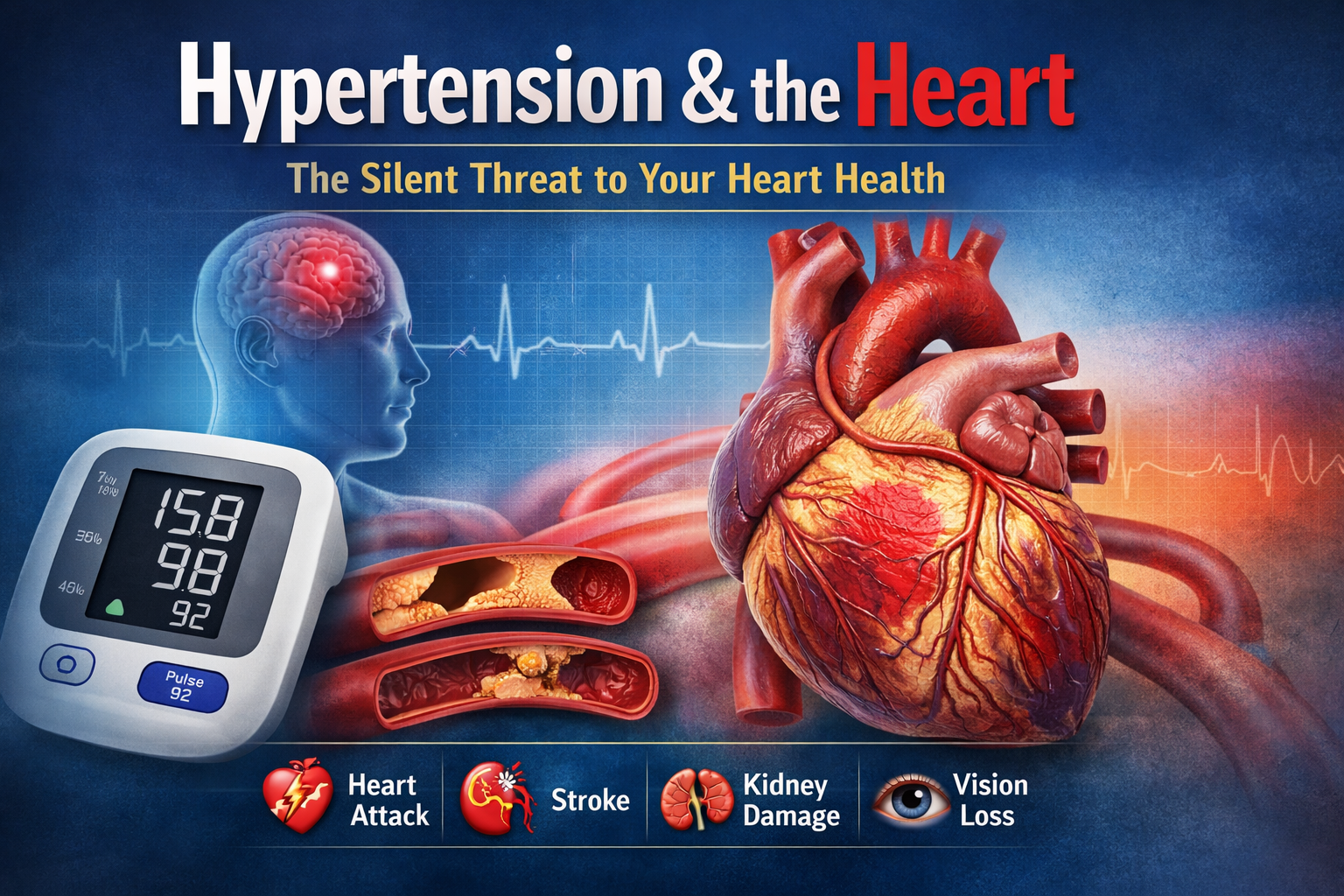
Hypertension and the Heart: The Silent Force Reshaping Your Life
High blood pressure does not announce itself loudly.
It does not always cause pain.
It does not interrupt your day in obvious ways.
Instead, it works quietly in the background — slowly increasing the workload on your heart, gradually damaging blood vessels, and silently raising the risk of life-threatening complications.
That is why hypertension is often called the “silent killer.”
By the time symptoms appear, the heart may already be under strain.
This blog will help you clearly understand what hypertension does to your heart, why it is dangerous, and how you can protect yourself — starting today.
What Is Hypertension?
Blood pressure is the force of blood pushing against the walls of your arteries as the heart pumps.
It is measured using two numbers:
-
Systolic pressure (top number): Pressure when the heart contracts
-
Diastolic pressure (bottom number): Pressure when the heart relaxes
A normal blood pressure is approximately 120/80 mmHg.
Hypertension is diagnosed when blood pressure readings are consistently 130/80 mmHg or higher.
But hypertension is not just a “number issue.”
It is a chronic pressure overload condition affecting your entire cardiovascular system.
Every single beat of your heart has to work harder.
And over years, that extra effort causes structural changes.
How High Blood Pressure Affects the Heart
Your heart is a muscular pump. When it faces resistance, it adapts — just like any muscle in your body.
1. The Heart Muscle Thickens
When blood pressure is high, the left ventricle (the main pumping chamber) must push harder to circulate blood. Over time, the muscle wall thickens. This condition is known as Left Ventricular Hypertrophy (LVH).
Initially, this seems like a positive adaptation.
But thickened heart muscle becomes:
-
Stiffer
-
Less flexible
-
Less efficient at relaxing
This leads to difficulty in filling with blood between beats. Eventually, it can cause diastolic heart failure.
2. The Heart Becomes Stiff and Weak
As years pass, constant pressure strain may weaken the heart muscle.
When the heart can no longer compensate, pumping ability declines. This can result in:
-
Shortness of breath
-
Fatigue
-
Swelling in legs
-
Reduced exercise capacity
This stage is known as heart failure, a serious and often life-altering condition.
3. Coronary Arteries Narrow Faster
Hypertension damages the inner lining of arteries (endothelium). This damage promotes:
-
Inflammation
-
Cholesterol buildup
-
Plaque formation
The process accelerates atherosclerosis, narrowing the coronary arteries that supply blood to the heart.
This significantly increases the risk of:
-
Heart attack
-
Sudden cardiac death
High blood pressure makes artery disease progress faster than normal aging alone.
Why Hypertension Is So Dangerous
The real danger of hypertension lies in its silence.
Many individuals feel completely normal even when blood pressure is dangerously high.
In fact, some people discover their hypertension only after experiencing:
-
A heart attack
-
A stroke
-
Kidney failure
-
Sudden severe headache due to hypertensive crisis
Because there are often no early symptoms, regular screening is essential.
Common Risk Factors for Hypertension
Hypertension develops due to a combination of lifestyle, genetic, and environmental factors.
Major contributors include:
-
High salt intake
-
Obesity
-
Sedentary lifestyle
-
Chronic stress
-
Smoking
-
Excess alcohol consumption
-
Diabetes
-
Family history
-
Poor sleep quality
-
Aging
Urban lifestyles, processed food consumption, and reduced physical activity have significantly increased hypertension rates — even in younger individuals.
The Complications of Uncontrolled Hypertension
High blood pressure affects every major organ system.
1. Heart Attack
Narrowed coronary arteries reduce blood flow to the heart.
2. Stroke
Damaged brain vessels may rupture or become blocked.
3. Heart Failure
Chronic overload weakens the heart muscle.
4. Kidney Disease
High pressure damages delicate kidney blood vessels.
5. Vision Loss
Retinal blood vessels can be permanently damaged.
Hypertension is not just a heart disease.
It is a whole-body vascular disorder.
Early Signs You Should Not Ignore
While many people remain asymptomatic, severe or long-standing hypertension may cause:
-
Headaches
-
Dizziness
-
Blurred vision
-
Chest discomfort
-
Palpitations
-
Breathlessness
-
Fatigue
However, waiting for symptoms is dangerous. Prevention requires proactive monitoring.
Can Hypertension Be Reversed?
In early stages — especially in young or newly diagnosed individuals — blood pressure can often be significantly improved through lifestyle changes.
However, long-standing hypertension may require lifelong management.
The goal is not just lowering numbers.
The goal is protecting the heart and preventing irreversible damage.
How to Protect Your Heart from High Blood Pressure
1. Reduce Salt Intake
Limit salt consumption to less than 5 grams per day.
Be cautious of hidden salt in:
-
Packaged foods
-
Pickles
-
Chips
-
Sauces
-
Processed snacks
Small reductions can produce meaningful blood pressure improvements.
2. Maintain Healthy Weight
Excess body weight increases vascular resistance.
Even a 5–10% weight loss can significantly lower blood pressure.
3. Exercise Regularly
At least 30 minutes of moderate exercise (such as brisk walking) five days a week improves:
-
Blood vessel flexibility
-
Heart efficiency
-
Weight control
-
Stress levels
Consistency matters more than intensity.
4. Manage Stress
Chronic stress keeps the body in a constant “fight-or-flight” state, raising blood pressure.
Helpful strategies include:
-
Meditation
-
Yoga
-
Deep breathing exercises
-
Adequate sleep
-
Limiting screen time before bed
Mental health and heart health are deeply connected.
5. Stop Smoking
Nicotine causes immediate blood vessel constriction and long-term damage.
Stopping smoking dramatically reduces cardiovascular risk.
6. Limit Alcohol
Excess alcohol raises blood pressure and weakens heart muscle.
Moderation is critical.
7. Take Medications as Prescribed
If lifestyle changes are insufficient, medications may be necessary.
Common classes include:
-
ACE inhibitors
-
ARBs
-
Beta blockers
-
Calcium channel blockers
-
Diuretics
Taking medication regularly is crucial. Skipping doses allows pressure to rise again, undoing protection.
The Importance of Regular Monitoring
Checking blood pressure regularly — even at home — is a powerful preventive tool.
You should monitor:
-
If you are above 30 years of age
-
If you have diabetes
-
If you are overweight
-
If there is family history
-
If you experience stress regularly
Early detection prevents long-term complications.
A Message That Matters
Hypertension does not destroy the heart overnight.
It reshapes it slowly.
Each day of uncontrolled high blood pressure means:
-
More strain
-
More vessel damage
-
More risk
But here is the empowering truth:
Hypertension is controllable.
It is manageable.
And its complications are largely preventable with awareness and action.
Your heart beats approximately 100,000 times every day.
Give it a chance to beat without pressure.
Frequently Asked Questions (FAQs)
1. Is hypertension permanent?
Not always. Early-stage hypertension can improve significantly with lifestyle changes. However, some individuals may require long-term management.
2. Can I stop medications once my BP becomes normal?
Only under medical supervision. Blood pressure often rises again if medication is stopped abruptly.
3. Does stress alone cause hypertension?
Stress contributes but usually combines with other risk factors like diet, genetics, and inactivity.
4. Can young people have hypertension?
Yes. Increasingly, people in their 20s and 30s are being diagnosed due to lifestyle changes.
5. What is the ideal blood pressure target?
For most adults, below 130/80 mmHg is recommended, but individual targets may vary.
About the Doctor
Dr. Dhamodaran K
Interventional Cardiologist
Dr. Dhamodaran K is a highly experienced Interventional Cardiologist known for his precision in diagnosis, evidence-based treatment approach, and patient-focused cardiac care. He specializes in the prevention, evaluation, and advanced interventional management of heart diseases, including coronary artery disease, angioplasty, stenting, heart failure management, and complex cardiac procedures.
With a strong commitment to early detection and preventive cardiology, Dr. Dhamodaran emphasizes comprehensive heart health evaluation, risk factor control, and personalized treatment planning. His clinical approach combines modern interventional techniques with compassionate patient care to ensure optimal outcomes.
Consultation Locations & Timings
Sidharam Multispeciality Clinic
Old #2, New #4, Canal Bank Road, Gandhi Nagar,
Adyar, Chennai, Tamil Nadu – 600020
Working Hours:
MON – THU : 06:00 PM – 09:00 PM
Apollo 247
Apollo Hospitals, Greams Road,
Chennai, Tamil Nadu
Working Hours:
MON – SAT : 10:00 AM – 04:00 PM
Book a Consultation
If you are experiencing symptoms such as chest pain, breathlessness, palpitations, fatigue, high blood pressure, or have risk factors like diabetes or family history of heart disease, timely cardiac evaluation is essential.
Schedule your consultation with Dr. Dhamodaran K for comprehensive heart care and expert interventional cardiology support.
Early detection saves heart muscle.
Prevention protects your future.