 +91 96001 07057
 Sidharam Heart Clinic Adyar, Gandhi Nagar, Canal Bank Road, Opp.St.Louis School, Adyar, Chennai, Tamil Nadu 600020


 9 October, 2026
Told You Have Multiple Heart Blockages? Is Bypass Surgery Your Only Option?
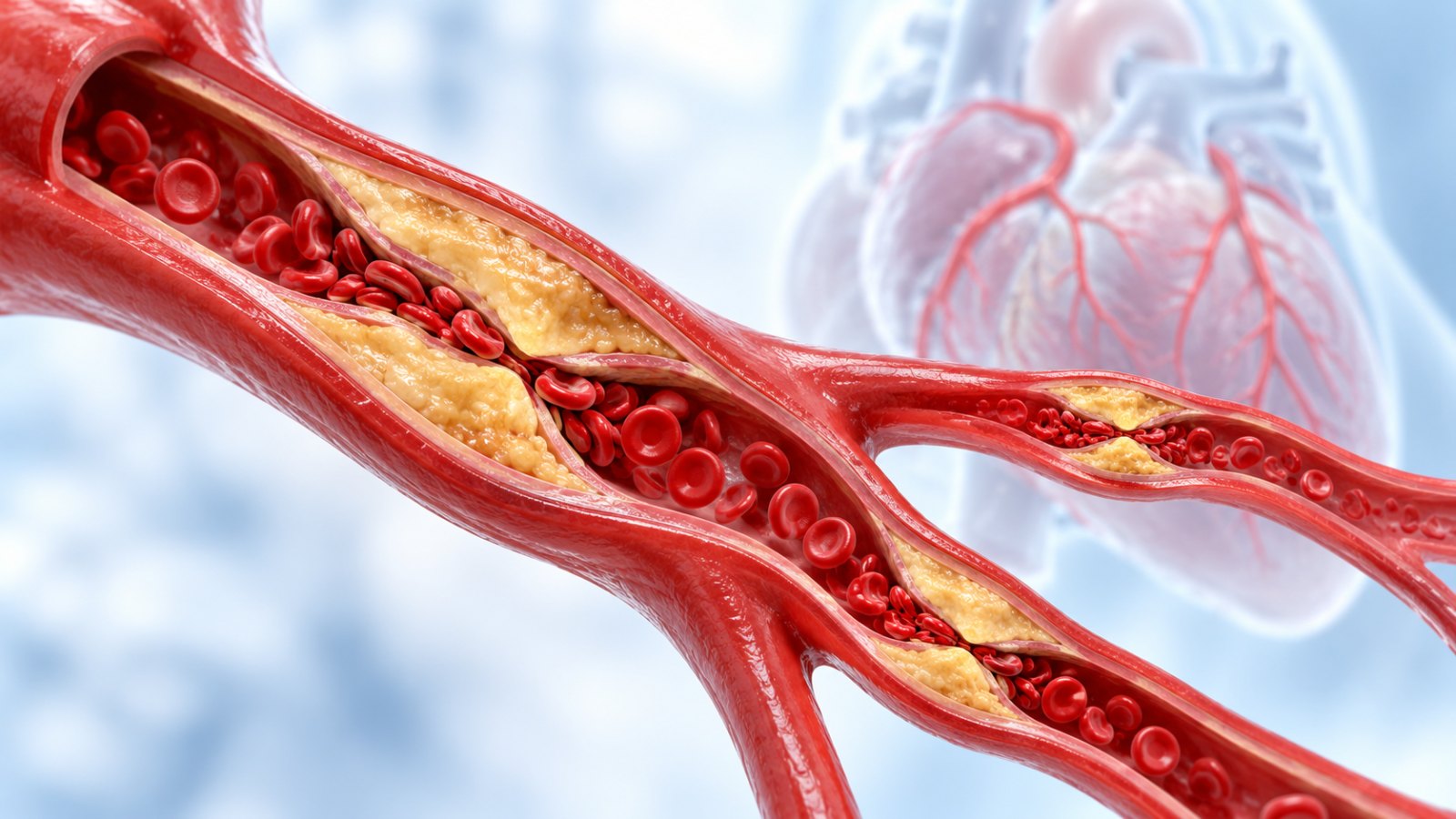
Few sentences change a family’s mood faster than this one: “The angiogram shows blockages in all three heart arteries.” Very often the next sentence is “you will need bypass surgery.” For many patients that is the right advice. But it is not automatically the only advice, and understanding why can help you make a calmer, better-informed decision.
A 64-year-old retired bank officer walks out of the cath lab recovery room holding a CD and a report full of words he has never heard: LAD, LCx, RCA, triple vessel disease, CABG advised. His daughter is already searching on her phone in the waiting area: “Can three blockages be treated without surgery?” His wife only wants to know one thing: “Is he going to be okay?”
All three are asking the right questions. This article answers them the way we would in a consultation room: honestly, with the evidence, and without pushing you towards one procedure.
Key takeaways
- “Triple vessel disease” means significant narrowing in all three main coronary arteries. It is serious, but it is treatable.
- Bypass surgery (CABG) remains the preferred treatment for many patients with very complex blockages, especially with diabetes or a weak heart, and it has strong long-term evidence.
- Complex (high-risk) angioplasty is a genuine alternative when the blockage pattern is less complex, when surgery is too risky, or when a surgeon has declined to operate.
- The best decision comes from a Heart Team discussion using your SYNTAX score, diabetes status, heart function and overall health — not from the number of blockages alone.
- What “multiple blockages” really means
- Why bypass is often the first recommendation
- The SYNTAX score: the number that matters more than “three”
- When complex angioplasty is the better choice
- How modern angioplasty treats multiple blockages
- Bypass vs complex angioplasty at a glance
- Questions to ask before you decide
- Frequently asked questions
What does “multiple heart blockages” actually mean?
Your heart muscle is fed by three main coronary arteries:
- LAD (Left Anterior Descending) — supplies the front wall of the heart, the largest territory. Doctors sometimes call a tight LAD blockage the “widow-maker” because of how much muscle depends on it.
- LCx (Left Circumflex) — supplies the side and back wall.
- RCA (Right Coronary Artery) — supplies the bottom wall and often the heart’s natural pacemaker.
The LAD and LCx both start from a short trunk called the left main artery. When all three arteries have significant narrowing (usually 70% or more, or a blockage proven to reduce blood flow), it is called triple vessel disease or multivessel coronary artery disease.
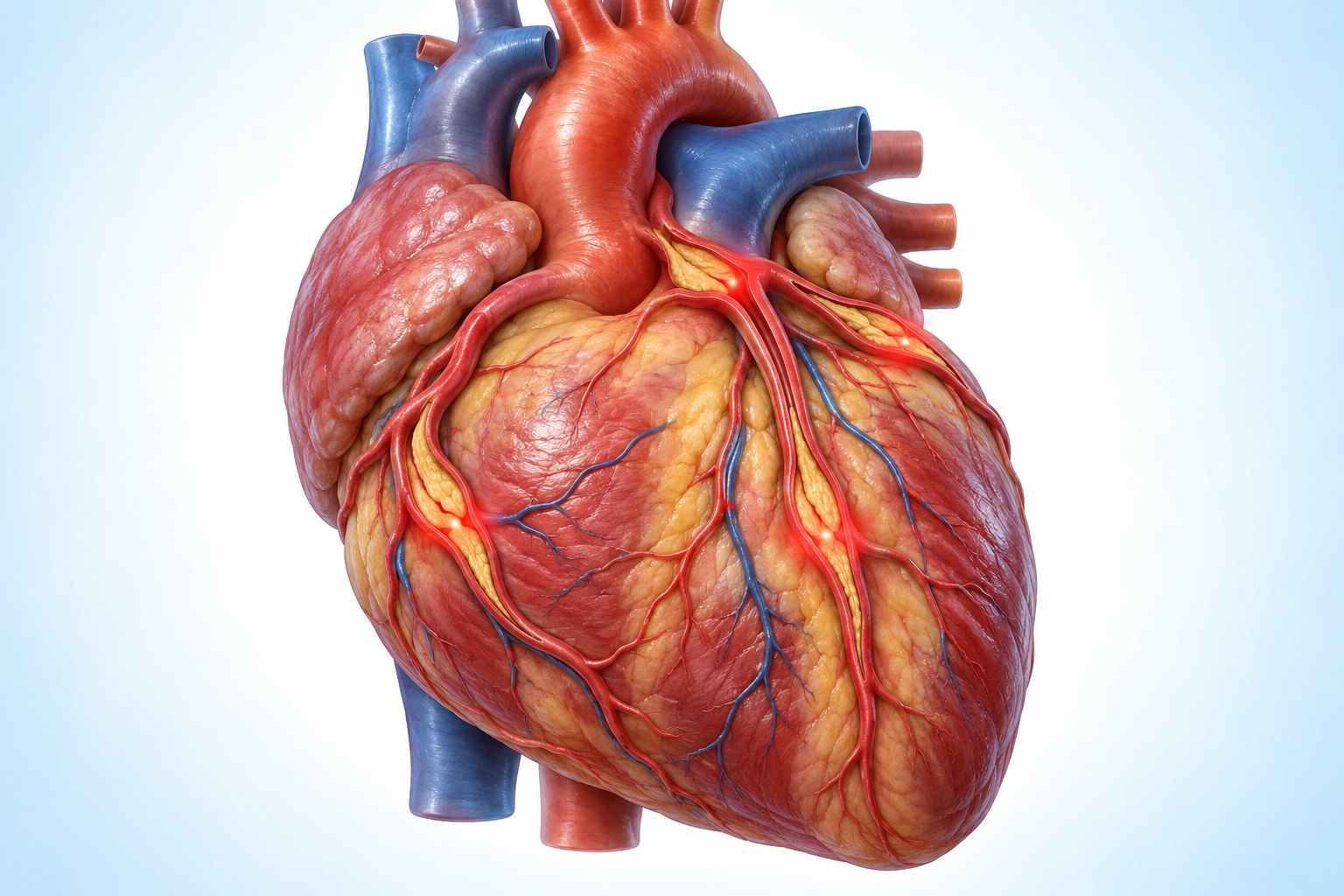
Important: “Three blockages” on a report does not tell you how serious the disease is. A short, soft 75% narrowing and a long, rock-hard, 100% calcified blockage at a branch point are completely different problems — even though both count as “one blockage”.
Myth vs fact: what families often hear
Why bypass surgery is often the first recommendation
Bypass surgery (Coronary Artery Bypass Grafting, CABG) creates new routes for blood around the blockages using arteries or veins from your own body. Its advantage is that a graft bypasses the whole diseased segment, including future narrowings that may develop beyond it.
Large trials support this. In the landmark SYNTAX trial, which followed about 1,800 patients with three-vessel or left main disease for ten years, patients with three-vessel disease had better long-term survival with bypass surgery than with the older stents used in the trial. The FREEDOM trial found a similar advantage for surgery in people with diabetes and multivessel disease. That is why current international guidelines generally favour CABG for complex multivessel disease, particularly when diabetes or reduced heart pumping are present.
So if your cardiologist recommends bypass, that advice deserves respect. But the same research also shows something many patients never hear.
The SYNTAX score: the number that matters more than “three”
The SYNTAX score is a scoring system your cardiologist calculates from your angiogram. It looks at where each blockage is, how long it is, whether it involves a branch point, how much calcium is present and whether any artery is completely blocked. The higher the score, the more complex the disease.
| SYNTAX score | Complexity | What the evidence suggests |
|---|---|---|
| 0–22 | Low | Angioplasty and bypass give broadly similar long-term results in many patients. |
| 23–32 | Intermediate | Either may be reasonable; diabetes, heart function and surgical risk usually decide. |
| 33 and above | High | Bypass surgery usually offers a long-term advantage if the patient is fit for surgery. |
In the ten-year follow-up of SYNTAX, patients with low and intermediate scores did similarly with either approach; the clearest benefit of surgery was in the highest-score group. Your score, more than the word “triple”, tells you how strong the case for surgery really is. Ask for it.
When complex angioplasty may be the better choice
Complex, high-risk angioplasty (doctors call it CHIP PCI — Complex High-risk Indicated Percutaneous Coronary Intervention) is not a “lesser” option. In the right patient it is the most appropriate one. It deserves serious consideration when:
Surgery is too risky
- Advanced age or frailty
- Severe lung disease (COPD)
- Kidney disease or prior stroke
- Previous bypass or chest surgery
A surgeon has declined
- Arteries too diffuse or small for grafts
- No suitable veins or arteries to use
- “Surgical turn-down” after Heart Team review
The anatomy suits angioplasty
- Low or intermediate SYNTAX score
- Focal blockages rather than long diffuse disease
- Not all three blockages actually limit flow
Patient priorities
- An informed patient who declines open-heart surgery
- Need for a faster recovery (caregiving, work)
- Acute heart attack needing urgent treatment
If you have already been told surgery is not possible, read our detailed guide: Bypass Surgery Is Too Risky for Me — What Other Treatment Options Do I Have?
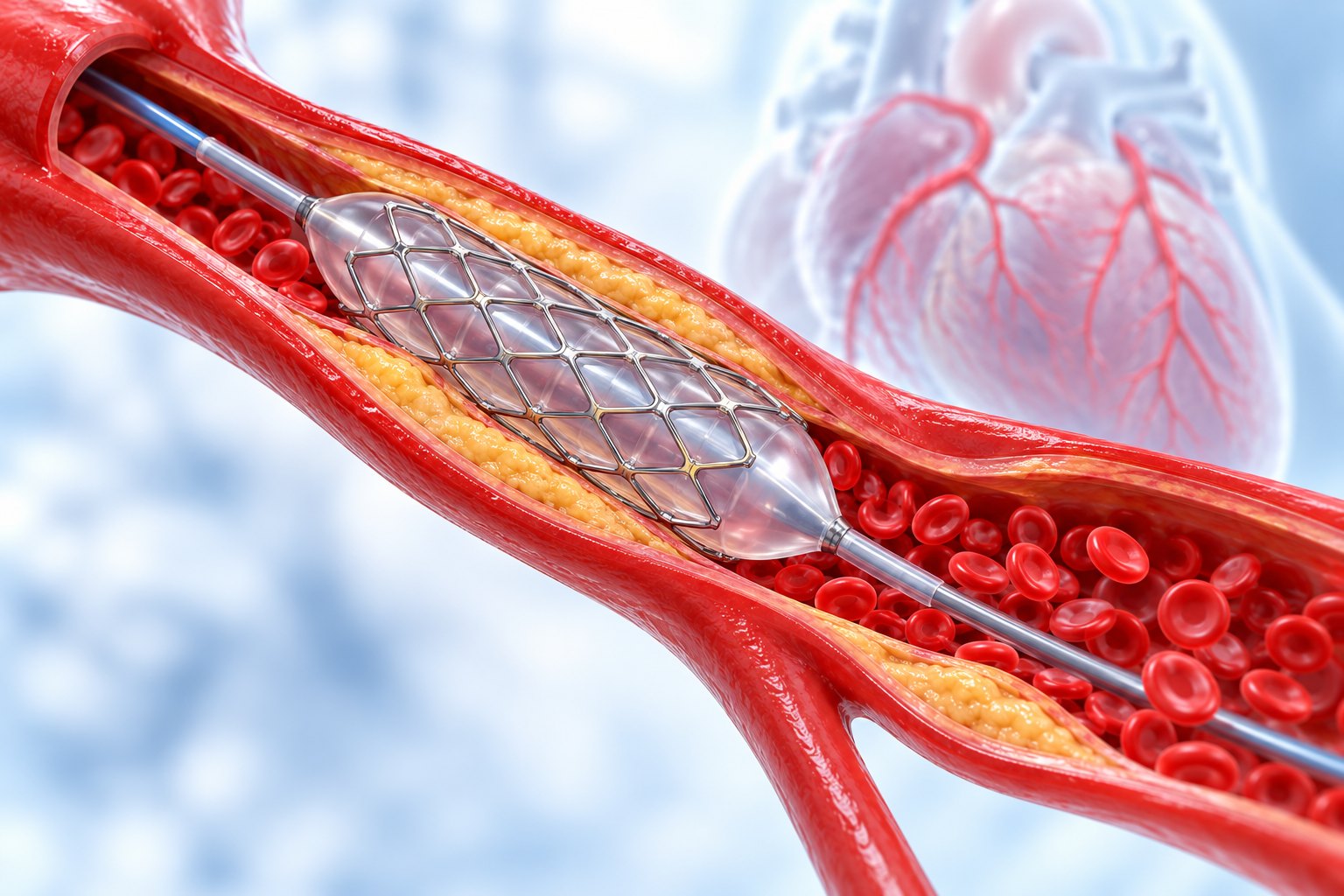
How modern angioplasty treats multiple blockages
Treating three blockages is not simply “putting three stents”. Modern complex angioplasty is a planned, step-by-step strategy built on four ideas.
1. Treat what matters: physiology before stents
Not every narrowing that looks tight actually starves the heart. Pressure-wire tests such as FFR or iFR measure whether a blockage really reduces blood flow. Blockages that do not are often better left alone with medicines. This frequently turns a “three-vessel problem” into a “two-stent solution”.
2. See inside the artery: imaging-guided PCI
IVUS (intravascular ultrasound) and OCT (optical coherence tomography) show the artery from the inside — its true size, the amount of calcium and whether the stent has opened fully. Large trials have shown that imaging-guided stenting reduces the risk of future stent problems compared with angiogram guidance alone.
3. Prepare hard, calcified arteries properly
Older patients and people with diabetes or kidney disease often have calcium in their arteries. Tools such as rotational atherectomy (a tiny diamond-tipped burr) and intravascular lithotripsy (sound-wave “Shockwave” balloons) crack the calcium so a stent can expand. Learn more in My Heart Blockage Is Heavily Calcified — Can Angioplasty Still Work?
4. Protect the heart during the procedure
When the heart is weak or the blockage feeds a large territory, a temporary heart pump such as Impella, or an intra-aortic balloon pump, can support blood pressure while the arteries are opened. This is called protected PCI. Some patients also have the procedure in two planned sittings (staged PCI) to reduce contrast load on the kidneys.
Bypass surgery vs complex angioplasty at a glance
| Bypass surgery (CABG) | Complex angioplasty (PCI) | |
|---|---|---|
| How it is done | Open-chest (or minimally invasive) surgery under general anaesthesia | Through a small puncture in the wrist or groin, usually under local anaesthesia |
| Hospital stay | Usually 5–7 days or more | Usually 1–3 days |
| Return to routine | About 6–12 weeks (breastbone healing) | Often within 1–2 weeks |
| Best evidence for | High SYNTAX score, diabetes with complex disease, weak heart with multivessel disease | Low–intermediate complexity, high surgical risk, surgical turn-down, emergencies |
| Repeat procedures | Less frequent | More frequent, though modern stents and imaging have reduced this |
| Lifelong medicines | Yes | Yes, including blood thinners for a defined period |
7 questions to ask before you decide
- What is my SYNTAX score?
- Has my case been discussed by both a cardiologist and a cardiac surgeon (a Heart Team)?
- Do all of my blockages actually reduce blood flow (FFR/iFR), or only some of them?
- How strong is my heart pump (ejection fraction)?
- Does my diabetes or kidney function change the recommendation?
- What is my estimated surgical risk (for example, the STS or EuroSCORE II)?
- If angioplasty is chosen, will it be imaging-guided, and will all significant blockages be treated?
A good cardiologist will welcome these questions. A second opinion is a normal part of any major heart decision, not a sign of distrust.
Whichever treatment you choose, this part is not optional
Neither stents nor grafts cure coronary artery disease. They treat the blockages that exist today. What protects you from tomorrow’s blockages is:
- Taking blood thinners and statins exactly as prescribed — never stopping them without your cardiologist’s advice.
- Keeping LDL cholesterol, blood pressure and blood sugar at the targets your doctor sets.
- Stopping smoking completely, including occasional smoking.
- Cardiac rehabilitation and regular walking.
- Follow-up visits, even when you feel perfectly well.
Read: Why Did My Heart Artery Become Narrow Again After Angioplasty?
Do not wait if you have: chest pain or pressure lasting more than a few minutes, pain spreading to the arm, jaw or back, sudden breathlessness, sweating or fainting. Call an ambulance (108 in India) and go to the nearest hospital with a cath lab.
Frequently asked questions
Can three heart blockages be treated without bypass surgery?
Yes, in many patients. Complex angioplasty can treat multiple blockages, especially when the SYNTAX score is low or intermediate, when surgery is high-risk, or when a surgeon has declined. For very complex disease in patients fit for surgery, bypass usually offers better long-term results, so the choice should be made after a Heart Team review.
Is triple vessel disease life-threatening?
It is a serious condition that increases the risk of heart attack and heart failure, but it is very treatable. With the right procedure and consistent medicines, most patients return to an active life.
Are all three blockages stented in one sitting?
Not always. Depending on kidney function, complexity and heart strength, treatment may be done in one sitting or in two planned (staged) procedures a few days or weeks apart.
Which is better for diabetics with multiple blockages — bypass or angioplasty?
For diabetic patients with complex multivessel disease who are fit for surgery, guidelines generally favour bypass. If surgery is high-risk, or the disease is less complex, modern imaging-guided angioplasty is a reasonable option.
What is CHIP angioplasty?
CHIP stands for Complex High-risk Indicated PCI. It describes angioplasty performed in patients with complex blockages and higher procedural risk — for example, elderly patients, those with weak heart pumping or those not suitable for bypass — using advanced tools such as intravascular imaging, calcium modification and heart pump support.
How long do stents last?
A stent is designed to stay in the artery permanently. Modern drug-eluting stents have low rates of re-narrowing, especially when placed with imaging guidance and supported by good medicines and lifestyle control.
Told you need bypass? Get a clear, unhurried second opinion.
Dr. Dhamodaran K reviews your angiogram, calculates your risk and explains every option — bypass, complex angioplasty or medicines — so your family can decide with confidence.
Sidharam Heart Clinic, Canal Bank Road, Gandhi Nagar, Adyar (Mon–Thu, 6–9 PM) · Apollo Hospitals, Greams Road, Chennai (Mon–Sat, 10 AM–4 PM)- Thuijs DJFM et al. Percutaneous coronary intervention versus coronary artery bypass grafting in patients with three-vessel or left main coronary artery disease: 10-year follow-up of the SYNTAX trial (SYNTAXES). Lancet 2019.
- Farkouh ME et al. Strategies for multivessel revascularization in patients with diabetes (FREEDOM). N Engl J Med 2012.
- Lawton JS et al. 2021 ACC/AHA/SCAI Guideline for Coronary Artery Revascularization. Circulation 2022.
- Vrints C et al. 2024 ESC Guidelines for the management of chronic coronary syndromes. Eur Heart J 2024.