 +91 96001 07057
 Sidharam Heart Clinic Adyar, Gandhi Nagar, Canal Bank Road, Opp.St.Louis School, Adyar, Chennai, Tamil Nadu 600020

 21 September, 2026
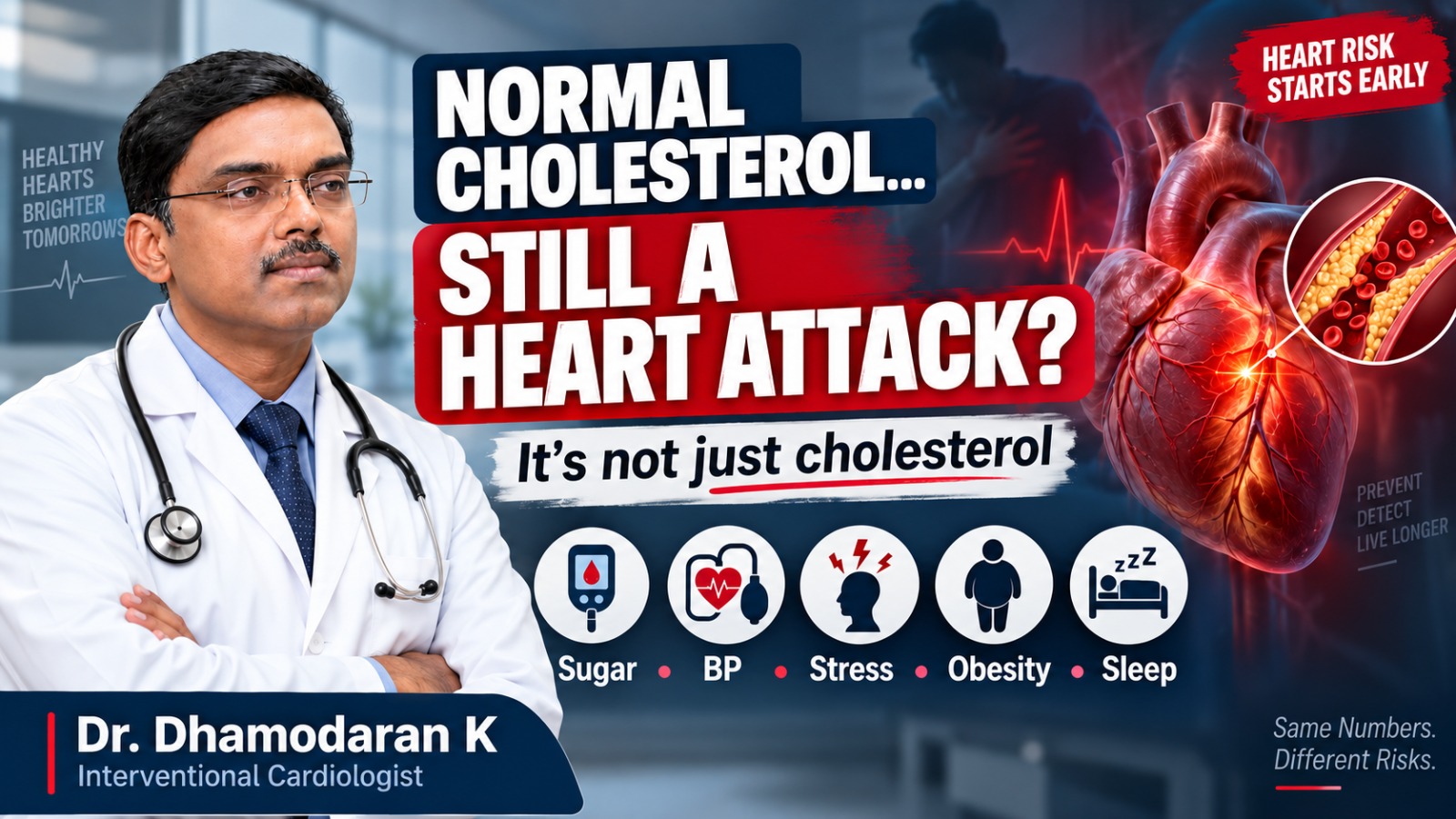
Normal Cholesterol but Still at Risk? The Other Heart Disease Risk Factors You Should Know
“My cholesterol is normal. Then how did I have a heart attack?”
This is a question cardiologists hear surprisingly often.
Most people associate heart disease almost entirely with cholesterol. And there is a good reason for that: high LDL cholesterol is one of the most important contributors to the development of coronary artery disease.
But cholesterol is only one part of the story.
A person may have a seemingly acceptable cholesterol report and still develop heart disease because several other risk factors may be acting together.
These can include:
- Diabetes
- High blood pressure
- Smoking
- Abdominal obesity
- Physical inactivity
- Poor sleep
- Chronic stress
- Family history and genetic susceptibility
This is particularly important for Indians and other South Asian populations, where diabetes, insulin resistance and abdominal obesity are common and cardiovascular disease can sometimes appear at a younger age than expected.
In this article, Dr. Dhamodaran K, Interventional Cardiologist in Chennai, explains why a normal cholesterol report does not mean zero heart risk, what other cardiovascular risk factors need attention, and why heart-health awareness should begin early rather than waiting for symptoms.
Is Cholesterol Really the Main Cause of Heart Disease?
Cholesterol plays a major role in atherosclerosis—the process in which plaque gradually builds up inside the arteries.
In particular, LDL cholesterol, often called “bad cholesterol,” can enter the walls of the coronary arteries and contribute to plaque formation.
Over many years, these plaques may:
- Narrow the artery
- Restrict blood flow
- Become inflamed
- Rupture suddenly
If a plaque ruptures, a blood clot can form and completely block the artery.
That can result in a heart attack.
So yes, cholesterol is extremely important.
But:
Heart disease is usually the result of multiple risk factors—not cholesterol alone.
Can You Have a Heart Attack With Normal Cholesterol?
Yes.
A normal-looking cholesterol report does not guarantee that your coronary arteries are completely healthy.
For example, imagine two people with the same LDL cholesterol.
Person A
- Normal blood pressure
- No diabetes
- Does not smoke
- Healthy weight
- Physically active
- No significant family history
Person B
- Diabetes
- High blood pressure
- Smokes
- Abdominal obesity
- Strong family history
- Poor sleep and chronic stress
Although their LDL values may look identical, their overall cardiovascular risks are very different.
This is why doctors do not assess heart risk using cholesterol alone.
Heart Risk Is a Combination of Factors
Cardiovascular disease develops through the interaction of:
Genetics
Metabolism
Lifestyle
Age
Environment
One risk factor may amplify another.
For example:
High cholesterol + diabetes + smoking
is considerably more concerning than any one factor in isolation.
This is why cardiovascular prevention should focus on the whole person, not one laboratory number.
1. Diabetes: One of the Most Important Heart Risk Factors
Diabetes has a particularly strong relationship with cardiovascular disease.
High blood glucose over many years can:
- Damage blood-vessel walls
- Increase inflammation
- Accelerate plaque formation
- Affect kidney function
- Alter cholesterol particles
People with diabetes may therefore develop coronary artery disease even when they do not have dramatic symptoms.
Why Diabetes Can Be Particularly Dangerous
Diabetes often occurs alongside:
- High blood pressure
- High triglycerides
- Abdominal obesity
- Fatty liver
- Kidney disease
Together, these conditions can substantially increase cardiovascular risk.
Long-standing diabetes also increases cumulative exposure of the arteries to metabolic stress.
That is why good diabetes control is not only about protecting the eyes, kidneys or nerves.
It is also heart protection.
What About Prediabetes?
Prediabetes should not be ignored.
It is a stage where blood sugar is higher than ideal but has not yet reached the diabetes range.
For many people, this is the ideal time to intervene.
Lifestyle measures may include:
- Weight reduction if overweight
- Regular exercise
- Reducing refined carbohydrates
- Improving sleep
- Better portion control
Early intervention can potentially delay or prevent progression to diabetes.
2. High Blood Pressure: The Silent Risk
Hypertension is often called a silent problem because many people feel completely normal despite having high blood pressure.
Over time, uncontrolled blood pressure can damage:
- Coronary arteries
- Heart muscle
- Brain circulation
- Kidneys
It also increases the mechanical stress placed on blood-vessel walls.
Why Young Adults Should Not Ignore High BP
A common mistake is to say:
“I am young. The blood pressure is probably just stress.”
One elevated reading does not automatically mean hypertension.
But repeatedly elevated readings deserve proper evaluation.
The longer high blood pressure remains untreated, the greater the cumulative damage.
3. Smoking
Smoking is one of the most preventable causes of cardiovascular disease.
It can:
- Damage the lining of arteries
- Increase inflammation
- Increase clotting tendency
- Reduce oxygen delivery
- Increase heart rate
- Increase blood pressure
Smoking is particularly concerning in younger people who develop premature heart attacks.
4. Abdominal Obesity
Body weight alone does not tell the whole story.
Where the body stores fat also matters.
South Asians commonly develop central or abdominal obesity, sometimes even when the overall body weight does not appear extremely high.
Abdominal fat is metabolically active and is associated with:
- Insulin resistance
- Diabetes
- High triglycerides
- High blood pressure
This cluster of risk factors can accelerate cardiovascular disease.
5. Physical Inactivity
Modern life often involves:
- Long hours sitting at a desk
- Driving instead of walking
- Screen time
- Little structured exercise
Physical inactivity can contribute to:
- Weight gain
- Insulin resistance
- High blood pressure
- Reduced cardiovascular fitness
Regular movement is one of the simplest ways to reduce long-term risk.
6. Chronic Stress
Stress should not be blamed for every heart attack.
However, chronic psychological stress can influence cardiovascular risk indirectly and sometimes directly.
It may contribute to:
- High blood pressure
- Poor blood-sugar control
- Smoking
- Emotional eating
- Poor sleep
- Reduced exercise
In someone who already has several cardiovascular risk factors, chronic stress can become another important part of the overall picture.
7. Poor Sleep and Insomnia
Sleep is often neglected when discussing heart health.
Regularly sleeping too little or having poor-quality sleep can affect:
- Blood pressure
- Blood sugar
- Appetite
- Stress hormones
- Weight
It can also worsen existing metabolic conditions.
Adults should aim for consistent, restorative sleep rather than treating sleep as optional.
8. Family History and Genetics
If close family members developed heart disease at a relatively young age, your own cardiovascular risk may be higher.
A significant family history may include:
- Father with an early heart attack
- Mother requiring angioplasty unexpectedly young
- Brother or sister with premature coronary disease
- Several family members with diabetes or very high cholesterol
This does not mean you are guaranteed to develop the same problem.
It means prevention deserves more attention.
Are Indians Genetically More Prone to Heart Disease?
South Asian populations, including Indians, are known to have a relatively high burden of:
- Diabetes
- Insulin resistance
- Abdominal obesity
- High triglycerides
- Cardiovascular disease
Genetics may contribute to this susceptibility.
However, it is important not to oversimplify the issue.
There is no single “Indian heart-attack gene.”
And these risk patterns are not found only in South Asians.
Rather, genetics interacts with:
- Diet
- Physical activity
- Body composition
- Diabetes
- Blood pressure
- Environment
to determine individual risk.
Why Can Heart Disease Appear Earlier in Indians?
Several factors may contribute:
- Higher rates of insulin resistance
- Greater tendency toward abdominal fat
- Diabetes at younger ages
- Smoking
- Sedentary lifestyles
- Poor dietary patterns
- Strong family history in some families
This is why waiting until age 50 or 60 to think about heart health may be too late for some people.
Should Heart Check-Ups Begin in Your 20s or 30s?
Young adults do not automatically need extensive heart scans.
But knowing your basic cardiovascular risk factors from early adulthood is sensible.
That includes:
- Blood pressure
- Blood sugar
- Cholesterol
- Weight
- Waist circumference
- Smoking status
- Family history
If these are abnormal, action can begin early.
What Tests Are Useful in Young Adults?
The starting point is usually simple.
1. Blood Pressure
Know your blood pressure rather than waiting until symptoms appear.
High blood pressure often produces no warning.
2. Lipid Profile
A lipid profile usually includes:
- Total cholesterol
- LDL
- HDL
- Triglycerides
Do not look only at the laboratory’s “normal range.”
The ideal target depends on your overall cardiovascular risk.
3. Blood Sugar and HbA1c
HbA1c gives an estimate of average blood sugar over the preceding few months.
Screening may be particularly important if you have:
- Family history of diabetes
- Obesity
- Abdominal obesity
- High blood pressure
4. Weight and Waist Circumference
A gradual increase in waist size may be an early warning of metabolic risk.
Pay attention to trends over time.
Does Everyone Need an ECG?
No.
An ECG records the electrical activity of the heart.
It can provide useful information in the appropriate situation.
But a normal ECG does not mean:
“My coronary arteries are definitely normal.”
Someone can have coronary plaque and still have a normal resting ECG.
Does Everyone Need a Treadmill Test?
No.
Treadmill testing should be used selectively according to:
- Symptoms
- Age
- Risk factors
- Clinical examination
It is not necessary simply because someone wants a routine health check.
Should Everyone Have an Echocardiogram?
No.
An echocardiogram is useful for evaluating:
- Heart pumping function
- Heart valves
- Structural heart problems
It is not a universal screening test for every healthy adult.
What About Coronary Calcium Scoring?
A coronary calcium score may be useful in selected adults when doctors need additional information to estimate cardiovascular risk.
It is not routinely required for every person in their 20s.
Testing should be targeted rather than excessive.
Why Targeted Screening Is Better Than Random Testing
More tests do not always mean better preventive care.
If your main concern is heart disease, the most useful approach is to evaluate:
Your actual cardiovascular risk factors.
For example, a person with:
- Family history
- Diabetes
- High BP
- High LDL
needs a different approach from a healthy young person without risk factors.
What Symptoms Should Never Be Ignored?
Even if previous check-ups were normal, seek medical assessment if you develop:
- Chest pressure
- Chest heaviness
- Breathlessness on exertion
- Unexplained sweating
- Dizziness
- Fainting
- Significant palpitations
- Sudden reduction in exercise tolerance
If symptoms are severe or sudden, seek emergency medical care.
Can Lifestyle Really Reduce Heart Risk?
Absolutely.
Genetics may influence your starting point.
But lifestyle affects much of what happens afterward.
Important measures include:
- Do not smoke
- Exercise regularly
- Maintain a healthy weight
- Control diabetes
- Control blood pressure
- Treat high LDL appropriately
- Sleep adequately
- Eat a balanced diet
What Should You Eat for Heart Health?
Focus on:
- Vegetables
- Whole fruits
- Pulses
- Legumes
- Whole grains
- Nuts
- Seeds
- Appropriate protein
Reduce excessive:
- Sugary drinks
- Refined carbohydrates
- Deep-fried foods
- Processed foods
- Trans fats
- Excess salt
The overall pattern matters more than any one “superfood.”
How Much Exercise Is Helpful?
Aim to make regular movement part of daily life.
Useful activities include:
- Brisk walking
- Cycling
- Swimming
- Strength training
If you are currently inactive, begin gradually.
If you have heart disease or concerning symptoms, ask your doctor for individual exercise guidance.
Frequently Asked Questions About Heart Disease Risk Factors
1. Can I have a heart attack even if my cholesterol is normal?
Yes.
Cholesterol is only one part of cardiovascular risk.
Diabetes, hypertension, smoking, genetics and obesity can also contribute.
2. Is cholesterol still important?
Absolutely.
LDL cholesterol remains one of the most important modifiable causes of atherosclerotic cardiovascular disease.
3. Which is more dangerous: cholesterol or diabetes?
It is not useful to rank them.
Both can significantly increase cardiovascular risk, particularly when present together.
4. Can diabetes cause heart disease even with normal LDL?
Yes.
Diabetes independently increases cardiovascular risk.
5. Can high blood pressure cause a heart attack?
Yes.
Long-standing hypertension contributes to arterial damage and increases cardiovascular risk.
6. Does stress directly cause heart attacks?
Stress is one contributor among many.
It can worsen blood pressure, glucose control, sleep and lifestyle habits.
7. Does poor sleep affect the heart?
Yes.
Chronic poor sleep is associated with adverse metabolic and cardiovascular effects.
8. Is obesity a heart-risk factor even if cholesterol is normal?
Yes.
Obesity—particularly abdominal obesity—is linked to insulin resistance, diabetes and high blood pressure.
9. Can thin people develop heart disease?
Yes.
Body size alone does not determine cardiovascular risk.
Thin individuals may still have:
- Diabetes
- High LDL
- Smoking history
- Strong genetics
10. If no one in my family had heart disease, am I safe?
No.
Family history is only one risk factor.
People without family history can still develop cardiovascular disease.
11. If my father had a heart attack, will I definitely have one?
No.
Family history increases risk but does not determine your future with certainty.
12. At what age should cholesterol be checked?
Knowing your cholesterol in early adulthood is useful, particularly if you have a strong family history or other cardiovascular risk factors.
13. Should I check blood pressure in my 20s?
Yes.
Blood-pressure measurement is simple, and hypertension can occasionally begin at a young age.
14. Should young adults check HbA1c?
It may be appropriate if you have:
- Family history
- Excess weight
- Abdominal obesity
- Other diabetes risk factors
15. Do I need a full-body check-up every year?
Not necessarily.
Targeted risk assessment is often more useful than indiscriminate testing.
16. Does a normal ECG mean I don’t have heart disease?
No.
An ECG cannot rule out all coronary artery disease.
17. Should everyone undergo a treadmill test?
No.
It should be ordered when clinically appropriate.
18. Should I get an echo even if I have no symptoms?
Not automatically.
An echocardiogram is useful when there is a reason to evaluate heart structure or function.
19. Can a 25-year-old have a heart attack?
It is uncommon but possible, particularly when major risk factors are present.
20. Why are Indians getting heart disease younger?
A combination of genetic susceptibility, diabetes, abdominal obesity, smoking, inactivity and metabolic risk may contribute.
21. Is genetics more important than lifestyle?
Both matter.
You cannot change genetics, but controlling modifiable risk factors can substantially reduce cardiovascular risk.
22. Does walking protect the heart?
Regular walking is an excellent form of physical activity and can improve several cardiovascular risk factors.
23. Is 10,000 steps mandatory?
No.
There is no single compulsory step target.
What matters is increasing activity from your baseline and remaining consistent.
24. Should I completely stop eating fat?
No.
The type of fat matters.
Focus on healthier unsaturated fats while limiting trans fats and excessive saturated fats.
25. Does avoiding sugar prevent heart disease?
Reducing excessive added sugar is helpful, but heart prevention requires more than one dietary change.
26. What if my cholesterol is normal but my family history is strong?
Discuss a broader cardiovascular risk assessment with your doctor.
Other factors may need attention.
27. Should I take aspirin to prevent a heart attack?
Do not start aspirin without medical advice.
It is not appropriate for everyone and can cause bleeding.
28. Should I start cholesterol medicine because of family history?
Not automatically.
Treatment depends on LDL level, overall cardiovascular risk and clinical history.
29. What are the most important numbers to know?
Know your:
- Blood pressure
- Blood sugar/HbA1c
- LDL cholesterol
- HDL
- Triglycerides
- Weight and waist circumference
30. What is the most important message for young adults?
Do not wait for chest pain to begin thinking about your heart.
Know your major risk factors early.
If something is abnormal, correcting it in your 20s or 30s may help protect your cardiovascular health for decades.
A Simple Heart-Risk Checklist
Ask yourself:
Does heart disease run in my family?
Do I know my blood pressure?
Do I know my cholesterol?
Do I know my blood sugar?
Has my waist size increased?
Do I smoke?
Am I physically active?
Am I sleeping well?
If several of these answers raise concerns, speak with your doctor.
You do not need to be afraid of screening.
The purpose is to find manageable risk factors before they become major disease.
Final Takeaway
Heart disease is rarely caused by one factor alone.
Cholesterol is extremely important—but it is not the whole story.
A person can have apparently normal cholesterol and still develop cardiovascular disease because of:
Diabetes
High blood pressure
Smoking
Abdominal obesity
Physical inactivity
Poor sleep
Chronic stress
Family history and genetic susceptibility
This is particularly relevant for Indians and other South Asian populations, where metabolic and cardiovascular risk can develop relatively early.
That does not mean every young person needs sophisticated heart scans.
It means we should start with the basics:
Know your numbers.
Know your family history.
Maintain a healthy lifestyle.
Treat abnormalities early.
The best time to think about heart prevention is not after a heart attack.
It is years before one ever happens.
Consult Dr. Dhamodaran K
Dr. Dhamodaran K
MBBS, DM (Cardiology), FNB, FESC, FSCAI
Interventional Cardiologist
Sidharam Heart Clinic / Sidharam Multispeciality Clinic
Old No. 2, New No. 4
Canal Bank Road
Gandhi Nagar, Adyar
Chennai – 600020
Tamil Nadu
Appointments
+91 96001 07057
Apollo Hospitals
Greams Road
Chennai, Tamil Nadu
Medical Disclaimer: This article is intended for general education and awareness only. Cardiovascular risk varies according to age, symptoms, family history, blood pressure, diabetes, cholesterol and other medical conditions. Screening and treatment should be individualised by a qualified healthcare professional. Seek urgent medical attention for persistent chest discomfort, sudden breathlessness, fainting or symptoms suggestive of a heart attack.