 +91 96001 07057
 Sidharam Heart Clinic Adyar, Gandhi Nagar, Canal Bank Road, Opp.St.Louis School, Adyar, Chennai, Tamil Nadu 600020

 16 July, 2026
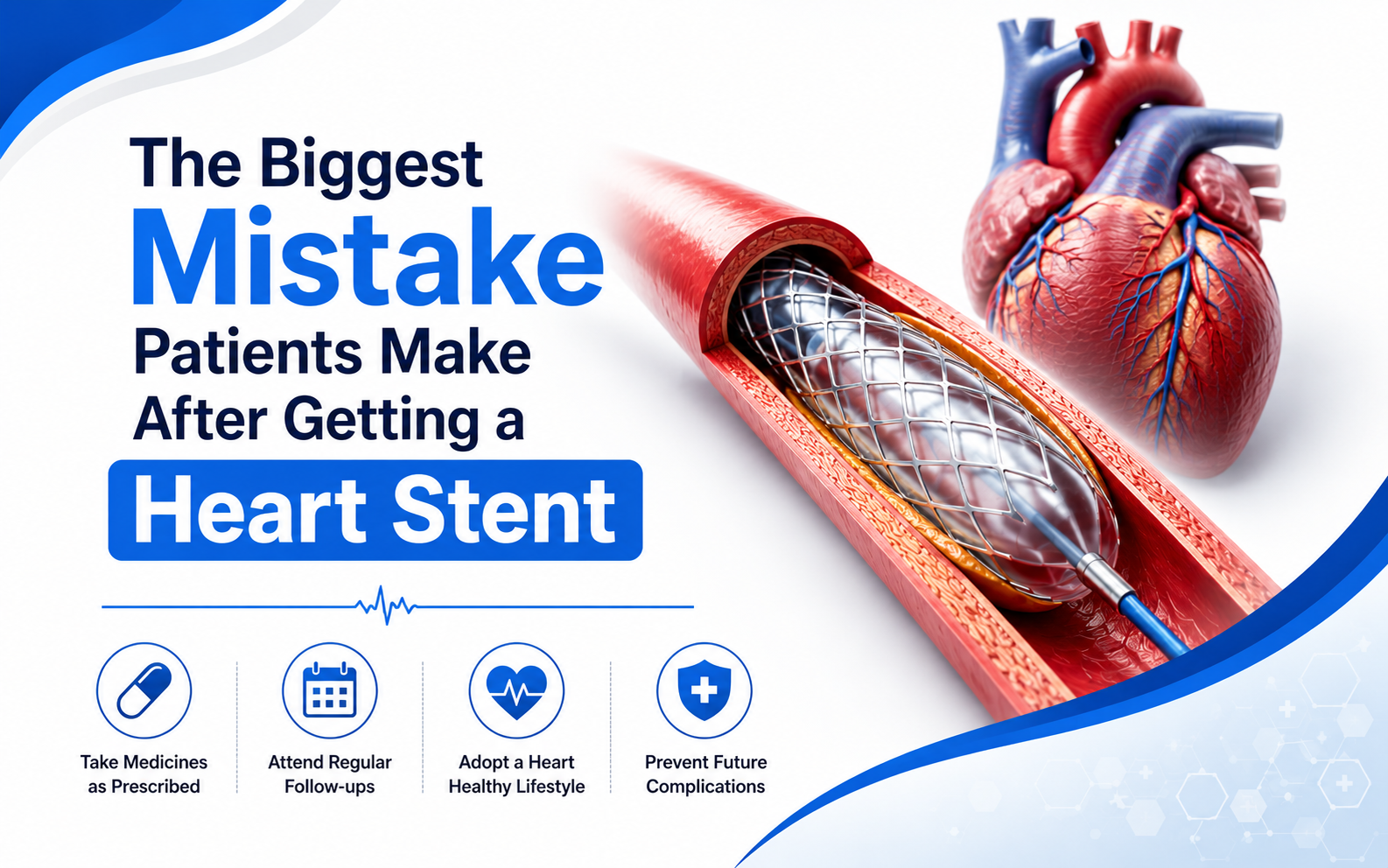
The Biggest Mistake Patients Make After Getting a Heart Stent
Receiving a heart stent is often a life-saving procedure. For many patients, it marks the end of a frightening experience caused by blocked arteries and the beginning of recovery. However, one of the biggest misconceptions is believing that once a stent has been placed, the heart problem is permanently solved.
In reality, a heart stent is only one part of the treatment. The success of the procedure depends largely on what happens after you leave the hospital.
Many patients unknowingly make mistakes during recovery that can increase the risk of complications, repeat blockages, or even another heart attack. Understanding these mistakes and avoiding them is essential for protecting your heart in the long term.
If you’ve recently undergone angioplasty and stent placement, or if a loved one has, knowing what to do after the procedure can make all the difference.
What Is a Heart Stent?
A heart stent is a small mesh tube placed inside a blocked coronary artery during angioplasty. Its purpose is to keep the artery open and restore normal blood flow to the heart muscle.
The procedure is minimally invasive and has helped millions of patients recover from coronary artery disease while reducing the risk of heart attacks.
However, a stent is not a cure for heart disease. It treats one blocked artery but does not eliminate the underlying condition that caused the blockage.
The Biggest Mistake: Stopping Medicines Too Early
The most common and dangerous mistake patients make is stopping their prescribed medications without consulting their cardiologist.
After stent placement, doctors prescribe blood-thinning medications to prevent blood clots from forming inside the stent.
If these medicines are stopped too soon:
- Blood clots can develop inside the stent.
- The artery may become blocked again.
- The risk of another heart attack increases significantly.
- Emergency treatment may be required.
Even if you feel perfectly healthy, never discontinue medication unless advised by the best cardiologist in Chennai.
Ignoring Follow-Up Appointments
Many patients skip follow-up visits because they believe they have recovered completely.
Regular follow-ups help your cardiologist:
- Monitor your heart function.
- Check whether medications are working effectively.
- Identify new risk factors.
- Detect early warning signs before they become serious.
Routine cardiac evaluations are just as important as the procedure itself.
Returning to Old Lifestyle Habits
A heart stent cannot protect you if unhealthy habits continue.
Some patients return to:
- Smoking
- High-fat diets
- Lack of exercise
- Excessive alcohol consumption
- Poor diabetes or blood pressure control
These habits continue damaging the arteries and can lead to new blockages.
Lifestyle changes remain the foundation of long-term heart health.
Not Controlling Blood Pressure, Diabetes and Cholesterol
High blood pressure, diabetes and high cholesterol are among the biggest reasons arteries become blocked.
Even after successful angioplasty, these conditions must be controlled through:
- Healthy eating
- Regular exercise
- Weight management
- Medication compliance
Ignoring these conditions increases the likelihood of needing another cardiac procedure in the future.
Ignoring New Symptoms
Never assume that chest discomfort after stent placement is “normal.”
Seek immediate medical attention if you notice:
- Chest pain
- Shortness of breath
- Sweating
- Pain spreading to the arm or jaw
- Sudden fatigue
Early diagnosis can prevent severe complications.
Why Cardiac Rehabilitation Matters
Cardiac rehabilitation is a structured recovery program that includes:
- Supervised exercise
- Nutrition counseling
- Stress management
- Lifestyle education
Patients who complete cardiac rehabilitation often experience:
- Better recovery
- Lower risk of another heart attack
- Improved quality of life
- Better long-term survival
Can a Stent Become Blocked Again?
Yes.
Although modern stents are highly effective, new blockages can develop if risk factors are not controlled.
This is why regular monitoring and preventive care remain essential.
Modern Cardiology Offers More Than Stents
Today’s cardiology has advanced far beyond traditional stenting.
Depending on the patient’s condition, advanced procedures may include:
- TAVR procedure
- TAVI procedure
- Transcatheter Aortic Valve Replacement
- Transcatheter Aortic Valve Implantation
These minimally invasive valve replacement procedures offer excellent outcomes for patients with severe aortic valve disease who may not be suitable for open-heart surgery.
Your cardiologist will recommend the most appropriate treatment based on your condition.
Protecting Your Heart After a Stent
Simple daily habits can make a tremendous difference:
- Take medications exactly as prescribed.
- Never miss follow-up appointments.
- Stop smoking permanently.
- Exercise regularly.
- Eat a heart-healthy diet.
- Manage stress.
- Control diabetes, cholesterol and blood pressure.
Recovery is not measured by how you feel today—it is measured by how well you protect your heart for years to come.
Final Thoughts
A heart stent can restore blood flow and save your life, but its long-term success depends on your commitment to ongoing care.
The biggest mistake patients make is assuming that the procedure alone has cured their heart disease. In reality, medications, healthy lifestyle choices, and regular cardiac follow-ups are equally important.
If you have undergone angioplasty or have concerns about your heart health, consult the best cardiologist in Chennai for expert guidance and personalized care.
Frequently Asked Questions (FAQs)
1. Can I stop my blood-thinning medicines after getting a heart stent?
No. Always continue your medications unless your cardiologist specifically advises otherwise.
2. How long does a heart stent last?
Most stents are designed to remain permanently, but maintaining a healthy lifestyle is essential to keep the artery open.
3. Is chest pain normal after a stent procedure?
Mild discomfort may occur initially, but persistent or severe chest pain should be evaluated immediately.
4. Can a blocked artery return after angioplasty?
Yes. New blockages or narrowing can develop if risk factors are not controlled.
5. How often should I visit my cardiologist after a stent?
Follow the schedule recommended by your cardiologist, even if you feel well.
6. What foods should I avoid after getting a heart stent?
Limit foods high in saturated fat, trans fat, salt, and added sugar. Choose a heart-healthy diet rich in fruits, vegetables, whole grains, and lean proteins.
7. What is the TAVR procedure?
The TAVR procedure (Transcatheter Aortic Valve Replacement) is a minimally invasive treatment used to replace a diseased aortic valve without open-heart surgery.
8. Is the TAVI procedure the same as TAVR?
Yes. TAVI procedure (Transcatheter Aortic Valve Implantation) and TAVR refer to the same minimally invasive valve replacement technique.
9. When should I seek emergency medical care after getting a stent?
Seek immediate medical attention if you experience severe chest pain, breathlessness, fainting, or symptoms similar to your previous heart attack.
About the Doctor
Dr. Dhamodaran K
Interventional Cardiologist | Chennai
Dr. Dhamodaran K is a highly experienced Interventional Cardiologist known for his expertise in diagnosing and treating complex cardiovascular diseases. He specializes in coronary artery disease, angiography, angioplasty, heart attack management, preventive cardiology, and advanced minimally invasive cardiac interventions.
With a patient-first approach and evidence-based treatment philosophy, Dr. Dhamodaran focuses on accurate diagnosis, timely intervention, and personalized long-term heart care. He also has expertise in advanced structural heart procedures, including the TAVR procedure (Transcatheter Aortic Valve Replacement) and TAVI procedure (Transcatheter Aortic Valve Implantation) for eligible patients.
Consultation Locations
Sidharam Multispeciality Clinic
Old #2, New #4, Canal Bank Road, Gandhi Nagar,
Adyar, Chennai, Tamil Nadu – 600020
Working Hours:
MON – THU | 06:00 PM – 09:00 PM
Apollo 24×7
Apollo Hospitals, Greams Road,
Chennai
Working Hours:
MON – SAT | 10:00 AM – 04:00 PM